

Startups and businesses built on Bubble.io have collectively raised more than $15 billion in outside funding. That number signals that Bubble isn’t a prototyping toy. Investors back Bubble-built companies. The problem isn’t finding a Bubble.io agency; the problem is that every “best agency” ranking online was written by one of the agencies it ranks, and every single one places itself at #1.
SmartPHP doesn’t run an agency. No referrals, no project pipeline. What follows is the ranking a neutral observer would produce: verified track records, actual pricing, and honest assessments of who each agency is best suited for.
Picking the wrong agency has real costs. A rushed build with weak data structure can cost more to rebuild than it did to build the first time.
What Does a Bubble.io Agency Actually Do?
More than build screens.
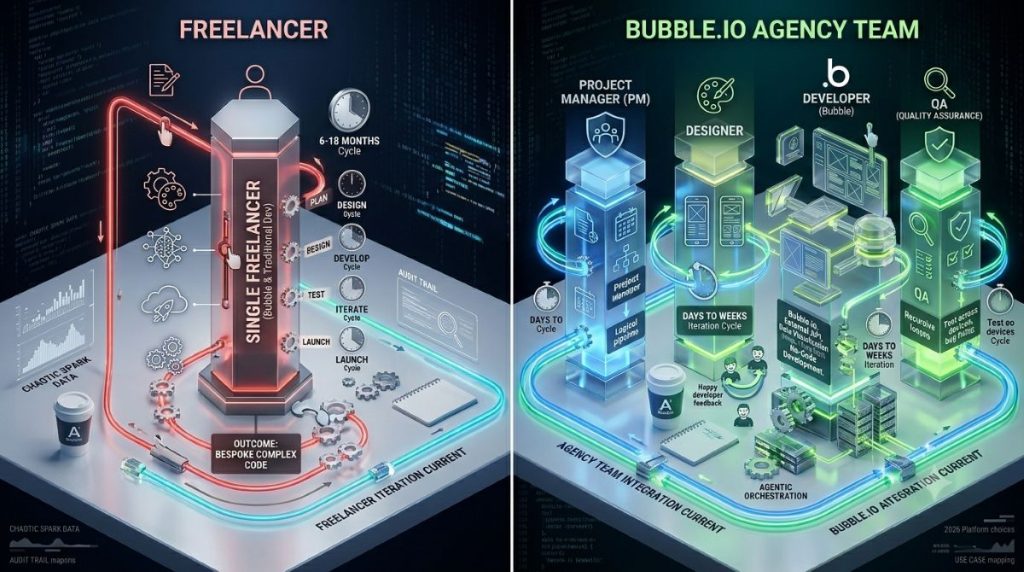
Bubble.io is a full-stack no-code platform. Building on it seriously requires decisions about database design, workflow logic, access control, API integrations, and post-launch infrastructure. Those choices are hard to undo. A strong Bubble agency doesn’t just execute your feature list. They shape the structure that determines whether your app survives real users at scale.
As of mid-2025, over 4.7 million apps have been built on Bubble, generating more than 5 billion page views per year. The platform’s ecosystem is deep, and the bubble agencies serving it have grown more specialized each year. For a sense of what’s been built, see our overview of apps built with Bubble.
Four things define what a production-ready Bubble agency delivers: app architecture (data structures, permissions, database setup), UX and frontend design, backend logic and API connections, and post-launch support. A freelancer can cover all four, but risks going dark mid-project or missing depth in one area. For a simple internal tool under $5,000, a freelancer is a reasonable bet. For anything client-facing or revenue-generating, agency continuity is worth the premium.
One 2026-specific update worth noting: Bubble launched native mobile dev in public beta in June 2025, with dedicated mobile pricing rolling out in October 2025. Agencies can now scope iOS and Android builds alongside web apps. The range of what you can commission from a specialist Bubble agency has grown.
Understanding Bubble’s Gold Partner Tier (What It Actually Means?)
Most articles list agencies as “Gold Partners” without explaining what the label requires. Here’s the plain-language version.
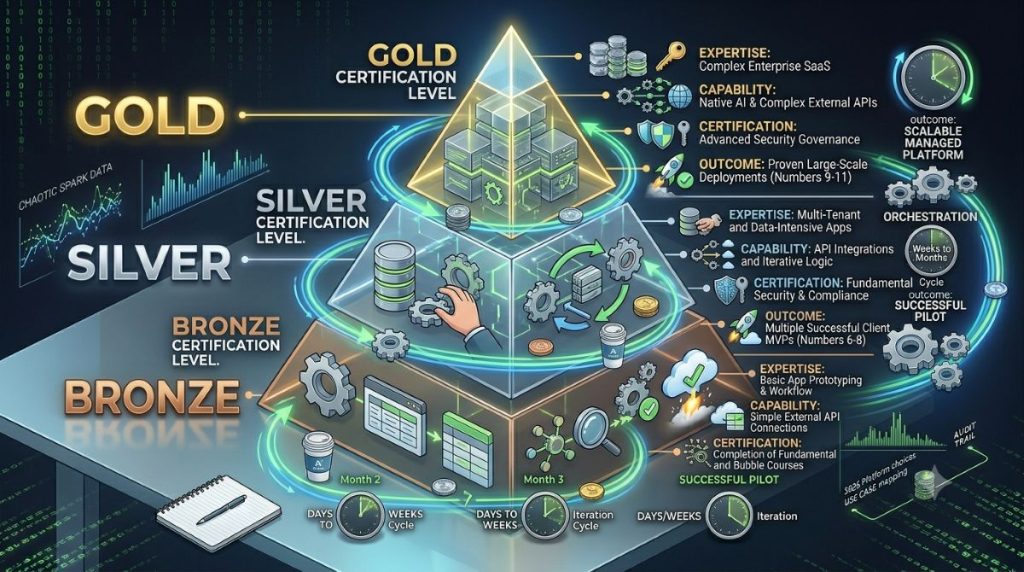
Bubble’s partner program runs three tiers: Bronze, Silver, and Gold. Gold requires a minimum number of apps transferred through Bubble’s platform. It also requires a set percentage of Bubble-Certified Developers on the team each quarter. And it requires sustained delivery metrics reviewed on a rolling cycle. The bar measures platform depth and team credentials — not service quality in a broader sense.
Gold status does not guarantee a fixed price, a specific outcome, or any standard of client communication. It tells you the agency has shipped real apps through Bubble’s systems and keeps a credentialed team. That matters. It isn’t everything.
For Smart Admins evaluating agencies, treat Gold Partner status as a floor, not a final filter. Every major agency on this list holds Gold status in 2026 — Airdev, Goodspeed, RapidDev, Million Labs, and Zeroqode are all Gold. The tier doesn’t tell you which one to hire.
Use Gold Partner status to eliminate newcomers who haven’t earned it. The project-type framework at the end of this article handles the actual decision. If you’re still evaluating whether Bubble is the right platform at all, our Bubble vs FlutterFlow vs Glide comparison covers the platform decision first.
The 8 Best Bubble.io Agencies in 2026 (Ranked)
The table below gives you a quick comparison. Detailed profiles follow.
| Agency | Best For | Starting Price | Bubble Tier | Clutch Rating |
|---|---|---|---|---|
| Airdev | Enterprise SaaS, complex platforms | ~$10,000 | Gold Partner | 4.9★ |
| Goodspeed | SaaS, AI apps, marketplaces | From $5,000 | Gold Partner (AotY 2024) | 5.0★ |
| RapidDev | Fast MVPs, startup validation | From $5,000 | Gold Partner | 4.7★ |
| Million Labs | Non-technical founders, investor MVPs | From $5,000 | Gold Partner | 4.8★ |
| Zeroqode | Plugin-heavy builds, training + dev | From $2,000/mo | Gold Partner | 4.9★ |
| LowCode Agency | Multi-platform strategy, hybrid stacks | Custom | Verified | 4.8★ |
| Minimum Studio | Design-heavy, fintech, EU market | From $15,000 | Verified | 4.8★ |
| BubbleLabs | AI-native SaaS, Bubble + AI API builds | From $9,000 | Verified | 4.4★ |
1. Airdev — The Structural Standard-Bearer
Founded in 2015, Airdev is the oldest Bubble agency still running at scale. They’ve delivered over 1,000 projects — the deepest production track record on this list.
Their key contribution to the Bubble ecosystem is Canvas, a proprietary framework used by thousands of developers globally. Building on Canvas means your app inherits a tested architecture from day one. That reduces structural risk as users and features pile up. Their service model splits into full-agency builds and a “Flex” option that supplies vetted Bubble developers to in-house teams.
Best for: Enterprise-grade SaaS, data-heavy platforms, and marketplaces that need strict access control and multi-role user logic.
Airdev starts from $10,000 for most projects. If your budget is under $15,000, they’ll refer you elsewhere. That honesty is a quality signal in itself.
2. Goodspeed — Bubble Agency of the Year 2024
Goodspeed earned Bubble’s Agency of the Year recognition for 2024 — a strong independent signal in a market where every agency ranks itself first. With 200+ apps and a 5.0 Clutch rating backed by third-party reviews, their production credentials hold up to scrutiny.
Their sprint-based delivery model suits founders who need clear milestones rather than open-ended retainers. More distinctively, they’ve built real depth in Workload Unit optimization — the metric that controls how efficiently your Bubble app runs under load. Poorly optimized WU usage is a common reason Bubble platform costs spiral. Goodspeed’s track record here is specific and verifiable.
Best for: Custom SaaS builds, AI-powered Bubble apps, marketplace development, and founders who want structured delivery with documented milestones.
One caveat: Goodspeed authors several of the agency ranking articles at the top of the SERP. Their Clutch reviews are third-party verified, so cross-check there rather than relying on their own editorial content.
3. RapidDev — Bubble’s Agency of the Year 2025
Officially founded in 2021, RapidDev won Bubble’s Agency of the Year award in 2025 — the most recent recipient of the recognition. Starting as two freelancers, RapidDev has grown to 100+ team members globally and delivered 400+ projects. Their typical MVP turnaround is 2–4 weeks.
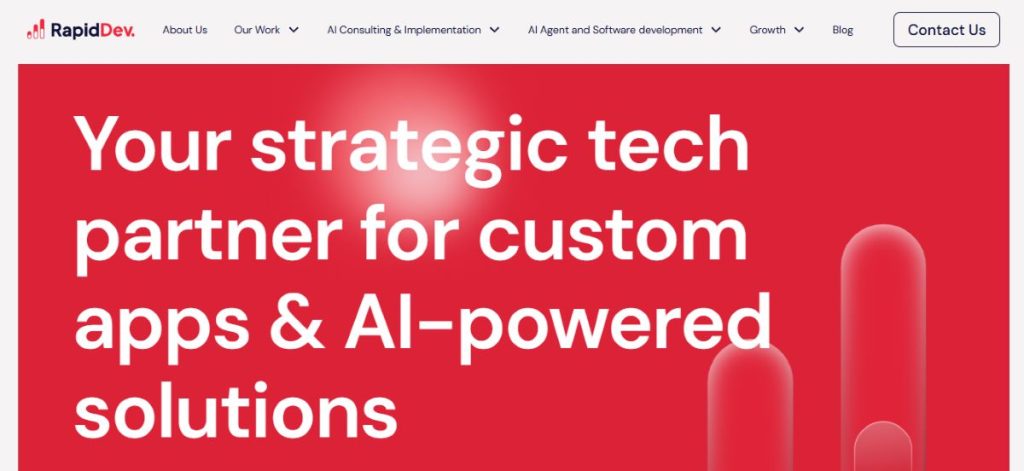
Speed doesn’t mean sparse documentation. RapidDev hands off projects with structured workflow notes — useful if you plan to iterate in-house or bring another agency in later. They’re also active in the Bubble plugin marketplace, which reflects genuine platform depth rather than surface-level experience.
Best for: Startup founders validating ideas fast, SaaS scale-up builds, and mobile-web hybrid apps.
Where they’re less suited: complex enterprise logic with heavy custom integrations may need a more methodical shop.
4. Million Labs — The Global Startup Factory
Since 2018, Million Labs has launched over 1,900 startups across 40+ countries. That’s an intentional, at-scale approach to no-code MVP delivery. It works well for non-technical founders who need guidance through product definition — not just the build phase.
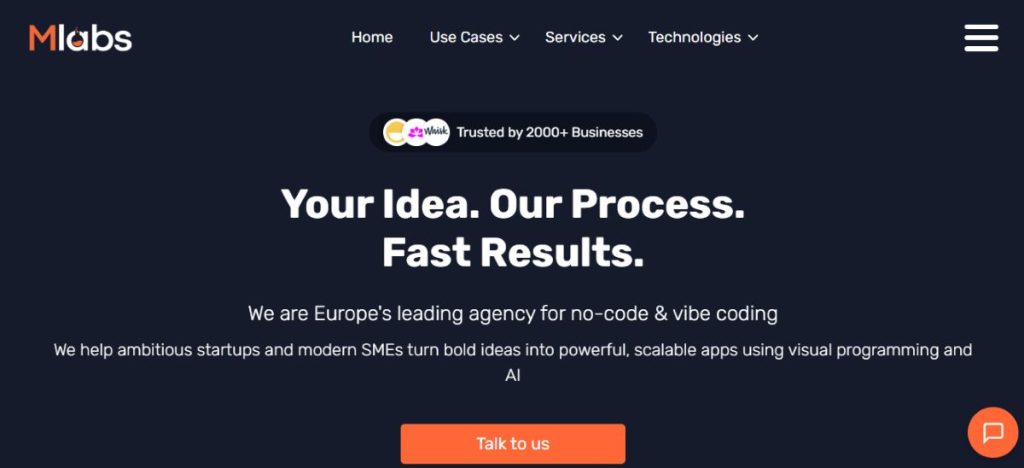
Their “Start, Launch, Grow” method covers the project from concept validation through post-launch iteration. In some cases, Million Labs takes equity stakes in client projects, aligning incentives in ways that a fee-only arrangement doesn’t. For founders who want a partner rather than a vendor, that’s worth exploring.
Best for: Non-technical founders building investor-ready MVPs, especially those who want strategic input alongside the technical build.
At this scale, team assignment can vary. Confirm who will build your app before signing.
5. Zeroqode — The Plugin Ecosystem Specialists
Operating since 2016, Zeroqode holds a unique spot: they’re both an agency and the most active plugin developer in the Bubble marketplace. With 180+ apps built and the largest catalog of Bubble templates and plugins, they bring deep platform customization that pure-delivery agencies can’t match.
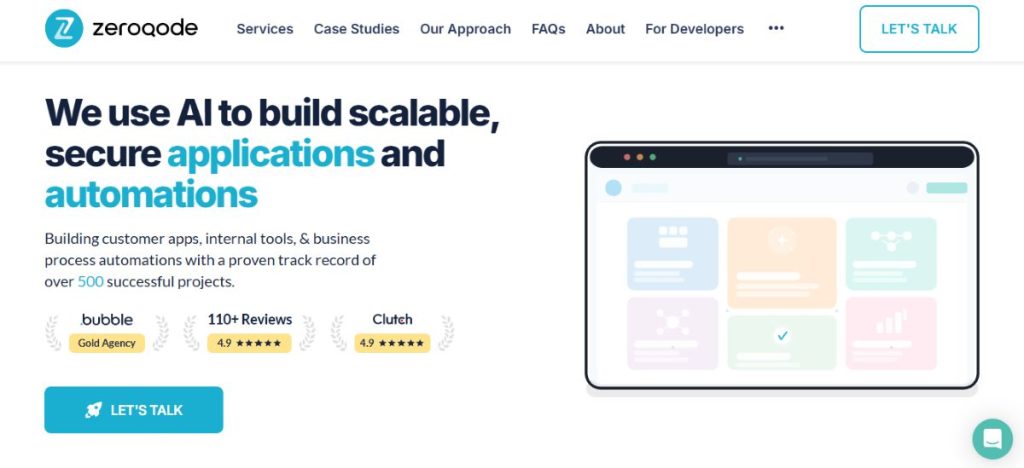
Their pricing is more flexible than most. Project-based work starts around $10,000; monthly retainers start from $2,000/month, which suits founders who want ongoing development rather than a single build. They also run training programs for teams that want to bring Bubble dev in-house over time.
Best for: Builds needing unusual third-party connections, plugin-heavy customization, or teams planning to develop internal Bubble skills.
6. LowCode Agency — The Multi-Platform Strategist
With 320+ apps built across Bubble, FlutterFlow, Webflow, and Glide, LowCode Agency is the best option if your roadmap spans platforms — or if you’re not sure Bubble is the right long-term fit.
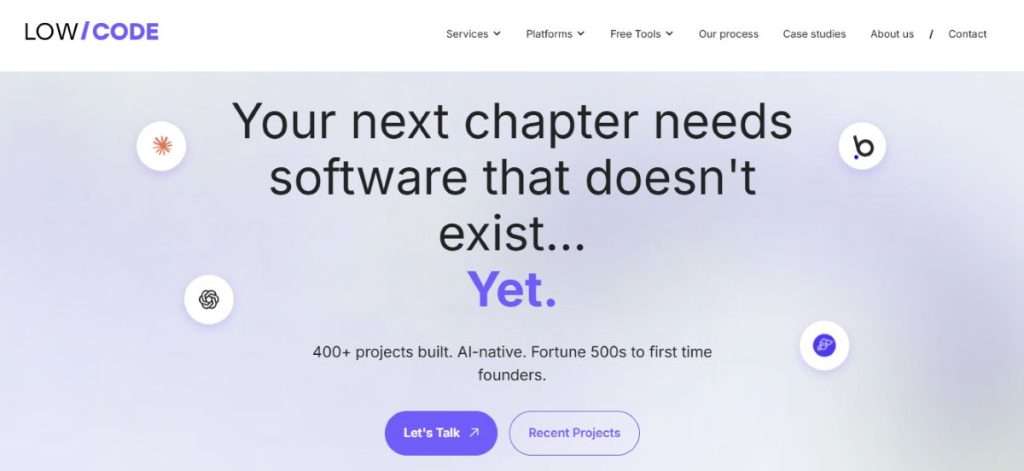
That breadth is a real asset for early-stage founders still choosing their stack. For those who know they want Bubble and want the deepest possible specialist expertise, a pure-play Bubble shop may go further. But for hybrid stacks or evolving strategies, LowCode Agency can advise on the full picture.
Best for: Businesses building across multiple no-code platforms, hybrid Bubble + automation stacks, and founders with an open platform decision.
7. Minimum Studio — The Design-First European Agency
Based in London and founded in 2018, Minimum Studio brings a design-first approach that most Bubble agencies skip. Their strongest work sits in fintech and healthtech — sectors where product experience must earn user trust at every step.
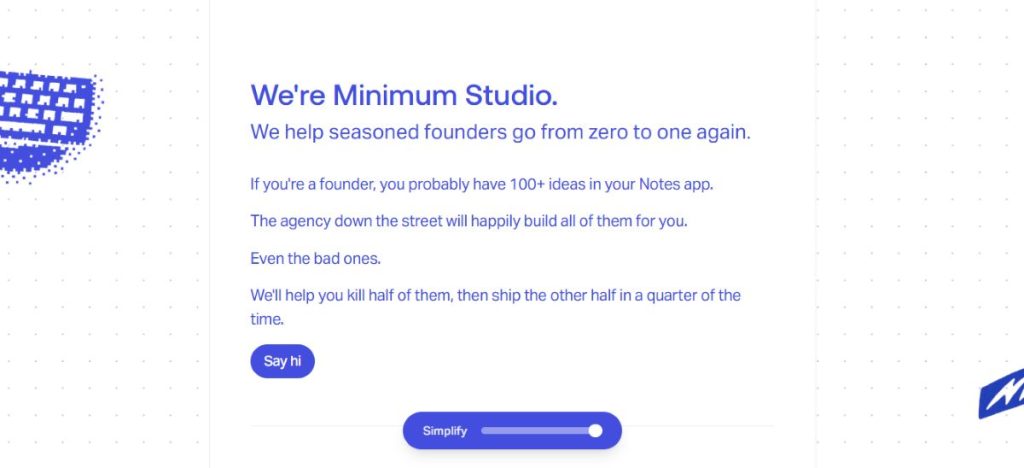
For founders targeting European markets, GDPR compliance is built into their development process from the start, not added as a checklist at the end. Pricing starts around $15,000, reflecting the UX depth applied to every project.
Best for: Design-intensive products, fintech and healthtech apps, and any project where GDPR compliance is a core need.
8. BubbleLabs — The AI-Native New Entrant
Launched in 2021 out of Miami, BubbleLabs focuses on a niche that has grown fast by 2026: Bubble apps that deeply connect AI APIs — Claude, ChatGPT, and custom models — as core product features rather than add-ons.
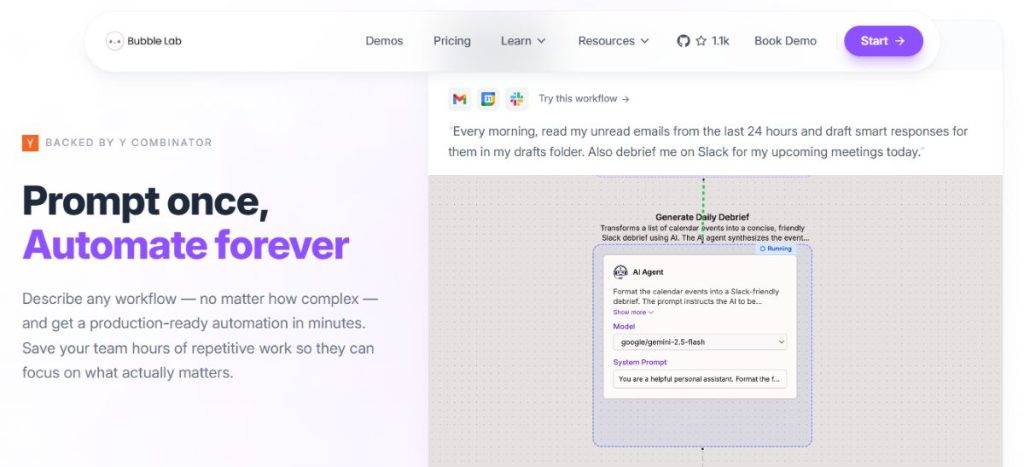
As AI-native products become the default for new SaaS builds, agencies that treat AI integration as a core skill outperform generalists on this type of project. For the broader landscape, see our guide to the best no-code AI platforms available today. BubbleLabs makes that case, and the market has validated the positioning.
Their track record is shorter than the agencies above. Check client case studies and ask for references in your specific product category before committing.
Best for: Founders building AI-first products who want Bubble’s speed with purpose-built AI integration.
Bubble.io Agency Plan Pricing: What You Actually Pay?
Two separate cost layers exist when working with any Bubble agency. Mixing them up is one of the most common budget mistakes founders make.
Layer 1 — The Bubble platform plan: what you pay Bubble.io each month to host and run your app. In 2026, web-track plans include: Starter at ~$29/month (annual billing), Growth at ~$119/month, Team at ~$349/month. Most production apps land on Growth or Team. Heavier usage triggers Workload Unit add-ons — from $29 to $599/month depending on scale. Active business apps often land between $300 and $1,500/month in total platform costs once WUs are counted.
Layer 2 — Agency development costs: Industry-wide, Bubble agencies charge $100 to $200 per hour. Fixed-price projects: MVPs run $10,000–$40,000; production SaaS with integrations runs $40,000–$100,000; enterprise work goes above $100,000.
A quote under $3,000 for a “complete product” is a red flag. Founders comparing Bubble agencies to self-build options may also find our guide to the best no-code platforms for MVPs useful before committing to an agency engagement. Agencies at that price point are usually building on undisclosed templates, underscoping, or both. The rebuild will cost more.
Always ask agencies to separate their development fee from your monthly Bubble plan estimate. Any agency that bundles them into a single number makes it impossible to understand your ongoing costs. That benefits them, not you.
How to Choose the Right Bubble Agency? The Project-Type Match
The right agency depends on your project type, stage, and budget.
“I need a fast MVP (budget under $15,000)” → RapidDev, Million Labs, Zeroqode can each deliver in 2–4 weeks at fair fixed prices.
“I’m building a marketplace” → Airdev, Goodspeed, LowCode Agency. Marketplace builds need precise multi-role access logic, payment splits, and supply-demand matching. Generic agencies get this wrong.
“I’m building AI-integrated SaaS” → BubbleLabs, Goodspeed, Airdev. Most agencies claim they handle AI connections. Fewer treat it as a real specialization.
“My product targets regulated European markets” → Minimum Studio. GDPR compliance built in from day one.
“I need to audit or fix an existing Bubble app” → Airdev (App Audit service), Goodspeed. Both offer structured architecture reviews. For teams building at enterprise scale, our guide to no-code enterprise application development covers governance and compliance considerations beyond the agency choice itself.
Before signing with any bubble.io development agency, get clear answers to five questions: How many apps have you transferred through Bubble’s platform? Can you show a live production app in my category? How do you handle Workload Unit costs as traffic grows? Do I own everything at handoff? What does post-launch support cost?
These five questions separate agencies that have built production apps from those that have assembled demos.
When Bubble Might Not Be the Right Platform?
Not every project belongs on Bubble, and an honest guide should say so.
If native mobile is your primary product — not a secondary channel — Bubble’s mobile builder is still maturing. FlutterFlow and Adalo are more capable for that specific use case as of mid-2025. Compute-heavy backend workloads can become more cost-effective on custom infrastructure at scale. Teams with existing engineers and a need for full code ownership are better served by traditional development.
Bubble’s 2026 sweet spot: a pre-revenue or early-funded startup that needs to prove product-market fit in three to six months without the overhead of a full dev team. In that context, the best bubble.io agency relationships consistently deliver a clear return.
Conclusion
The best Bubble.io agency is the one matched to your project type, budget, and stage. Airdev for enterprise architecture. Goodspeed for sprint-based SaaS and AI builds. RapidDev for validated MVPs. Million Labs for non-technical founders going global. Zeroqode for plugin-deep customization. Minimum Studio for design-focused EU products. BubbleLabs for AI-native builds.
Gold Partner status tells you an agency has the platform depth to do the job. The framework above tells you which one to call first. Founders who want to understand the platform before the first agency call may want to start with our Bubble.io tutorial for beginners.
Bubble’s 2026 roadmap points toward deeper AI tools, better infrastructure, and a maturing native mobile experience. The agency ecosystem will grow more specialized as those features ship. Pick a partner already operating at the depth your project requires — not one growing into it on your timeline.
Frequently Asked Questions
Gold Partner agencies have transferred a higher minimum number of apps through Bubble’s platform. They also must keep a higher share of Bubble-Certified Developers on staff each quarter. Silver requires less on both fronts. Gold is the top tier and serves as a strong baseline signal for serious project engagements. Both tiers are reviewed quarterly — the badge isn’t awarded once and forgotten.
Most agencies deliver a functional MVP in 4–8 weeks from project kick-off. Agencies like RapidDev target 2–4 weeks for simpler scope. More complex MVPs with custom APIs, multi-role access, and payment flows typically run 6–10 weeks. How clearly the scope is defined before the build starts is the biggest variable. Vague briefs extend timelines regardless of agency speed.
Yes — and good agencies hand off full app ownership. Before signing, confirm that you’ll receive the Bubble app under your own account, that workflows are documented, and that you’re not locked into a system the agency controls. Builds using documented frameworks like Airdev’s Canvas are generally easier to transfer than those with custom undocumented logic.
These are two separate costs. Agency pricing is the development fee you pay the agency to build your app — typically $10,000–$40,000 for an MVP. Bubble plan pricing is the monthly subscription you pay Bubble.io to host the finished app — typically $29–$349/month, plus Workload Unit costs at scale. A full project budget needs both numbers. Any agency quoting a single all-in figure should break it down when asked.
Production-grade, when built correctly. Bubble-built apps have handled millions of transactions and scaled to hundreds of thousands of users. The platform generated over 5 billion page views annually as of mid-2025. What determines whether your app is production-ready is architecture quality — not the platform. A well-built Bubble app scales. A poorly-built one breaks at a few hundred users. This is why choosing the right agency matters more than choosing the platform.