
Zapier still handles simple automations well, but as workflows grow, its task-based pricing and limits push many no-code teams to look elsewhere. This guide covers 10 Zapier alternatives for 2026 — what each tool does, what it connects, and who it fits — so you can automate repetitive tasks like lead routing and data scraping without the task tax.
The tools below span visual workflow builders, open-source self-hosted platforms, developer and API-first automators, AI-native tools, and enterprise systems. Match one to your existing stack rather than to its marketing.
Visual, no-code workflow builders
Make — visual canvas workflows
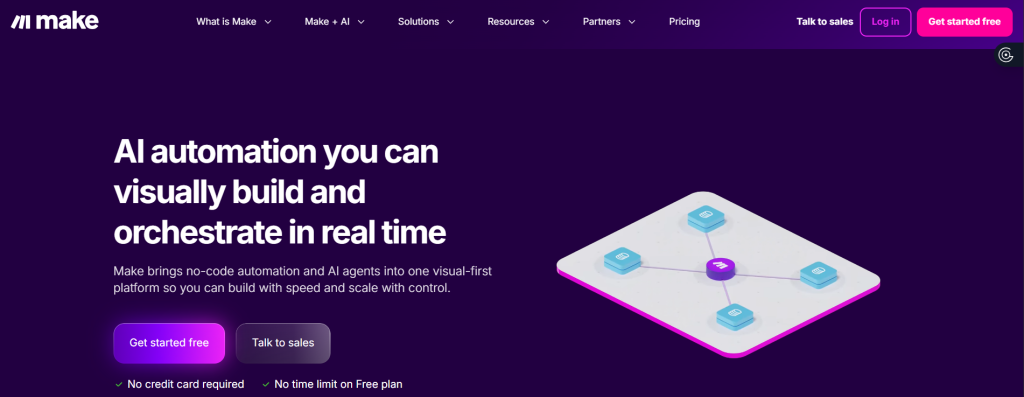
Make (formerly Integromat) is the strongest Zapier alternative for visual workflow building. Its canvas view lays out every trigger, step, and connection so you can see complex automations at a glance, and it handles nested JSON, filters, and iterators that simple trigger-action tools can’t. In conclusion, Make emerges as a top contender among Zapier alternatives for automating your workflows in 2026. Its visual logic, AI agents, and granular data control make it a versatile tool for streamlining processes and maximizing efficiency in your automation tasks.
Best for: teams that need branching logic, data transformation, or API automation in a no-code visual workflow builder, including WordPress website automation. A single Make scenario can replace several Zapier Zaps, which cuts maintenance.
Activepieces — drag-and-drop open-source automation
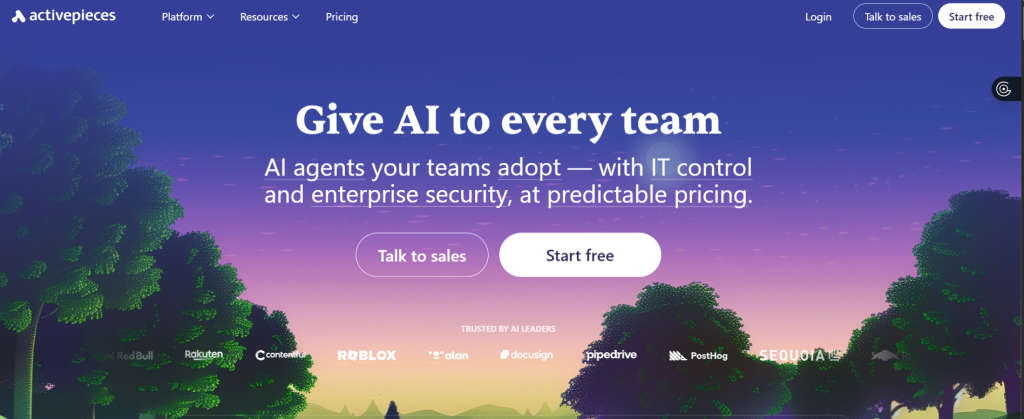
Activepieces gives no-code users a drag-and-drop interface that’s simpler than developer-first tools but more capable than Zapier. It’s open-source automation with a large community connector library you can build on and share.
Best for: teams that want a free, self-hostable visual workflow builder with prebuilt pieces and an approachable UI.
Relay.app — human-in-the-loop approvals

Relay.app is built for workflows that pause for a person. It adds human approval steps, conditional routing based on a user’s response, and a clean UI non-technical teammates can follow.
Best for: contract approvals, review workflows, and any process that mixes automation with human judgment.
Open-source, self-hosted automation
n8n — self-hosted, fair-code automation
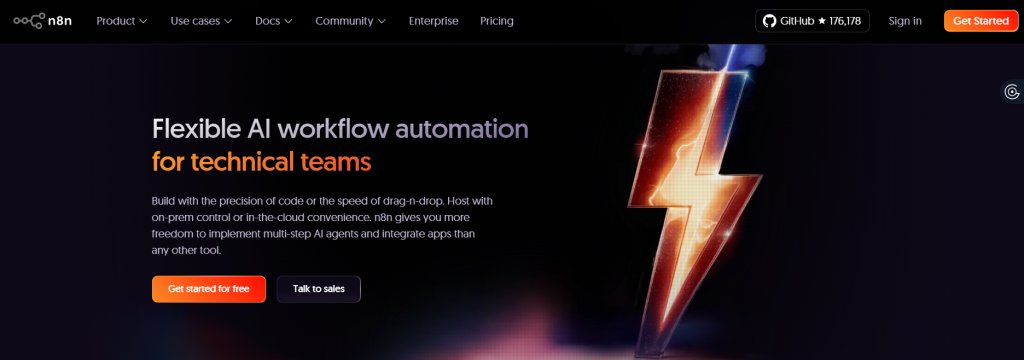
n8n is the top pick when you want full control. Its self-hosting capabilities keep data inside your own infrastructure, and custom JavaScript nodes handle edge cases Zapier can’t. It’s open-source automation with a solid cloud option for teams that want privacy without running a server.
Best for: privacy-conscious teams, developers, and agencies that need customizable automations without subscription lock-in.
Pabbly Connect — flat-price, unlimited-task automation
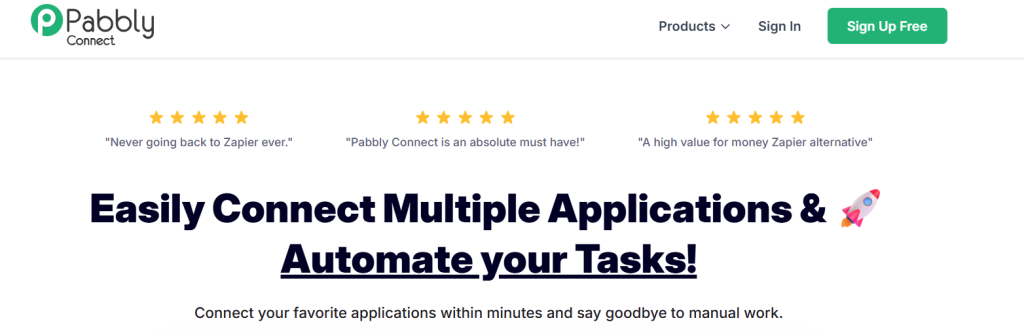
Pabbly Connect targets high-volume workflows with flat pricing and no per-task metering; internal steps like filters and formatters don’t count against you, and lifetime-access plans are available.
Best for: high-volume lead generation and e-commerce automations that would rack up task charges elsewhere.
Developer and API-first automation
Pipedream — code-and-no-code API automation
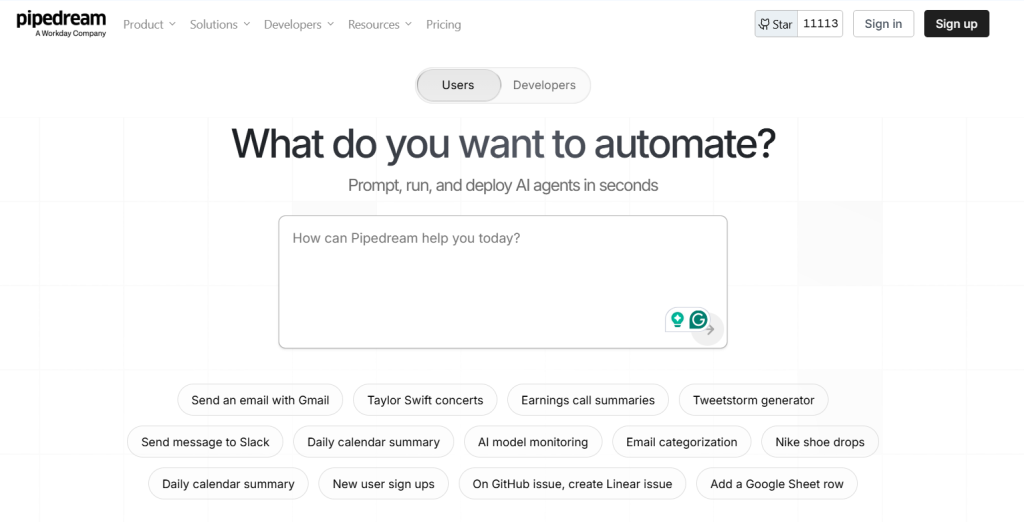
Pipedream mixes prebuilt actions with JavaScript or Python, so you can reach obscure services and handle custom authentication. It’s event-driven, triggering from webhooks, schedules, and cloud events.
Best for: no-code builders who hit an integration gap and need a little code to close it, without a full dev team.
Integrately — one-click prebuilt automations
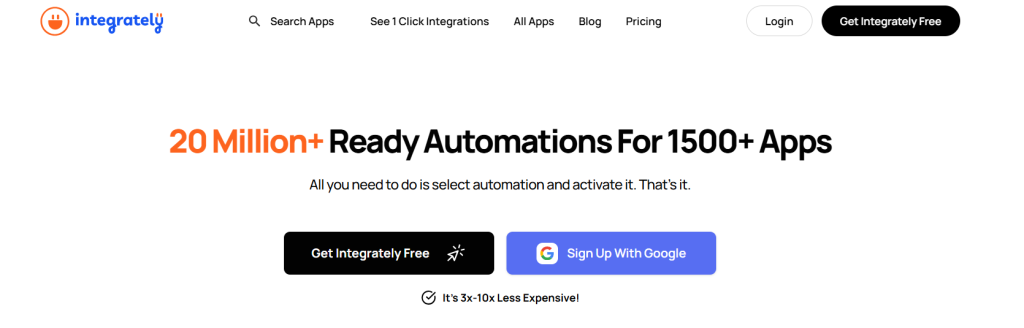
Integrately leans on ready-made, one-click automations for common apps, which makes setup fast for non-technical users. It’s aimed at small businesses connecting tools like WordPress, Slack, and CRMs, and is a practical route to WordPress website automation.
Best for: entrepreneurs and service businesses that want working automations quickly over deep customization.
AI-native and browser automation
Vellum AI — LLM workflow orchestration
Vellum AI is a Zapier alternative for AI work automation: it chains prompts, compares model outputs, and lets you design automations driven by AI decisions rather than fixed rules, with evaluation tools to test and compare models. It isn’t a direct Zap competitor — it fills the gap for AI-native workflows and autonomous AI agents.
Best for: teams building decision-based automation on large language models.
Bardeen AI — browser-based task automation
Bardeen AI runs automations directly in the browser, capturing the exact steps you take across web apps and tabs — useful for data scraping and research workflows that start in tools like LinkedIn, where external connectors can’t easily reach. Its AI-agent features push it beyond simple trigger-action plumbing.
Best for: workflows that begin inside browser apps.
Enterprise automation
Microsoft Power Automate — Microsoft 365 and desktop RPA
Microsoft Power Automate is the enterprise standard when your stack is already Microsoft. It integrates deeply with Teams, SharePoint, and OneDrive, meets enterprise security and compliance needs, and adds desktop RPA capabilities so you can combine cloud flows with desktop flows to improve operational efficiency.
Best for: organizations on Microsoft 365 that need governance alongside automation.
Comparison Table: Zapier Alternatives in 2026
| Tool | Best For | Pricing Model | Self-Hostable |
|---|---|---|---|
| Make | Visual, logic-heavy automation | Subscription | No |
| n8n | Open-source automation | Cloud / Self-host | Yes |
| Activepieces | User-friendly open source | Free / Paid | Yes |
| Relay.app | Human approval workflows | Subscription | No |
| Pabbly Connect | Unlimited tasks | Flat fee | No |
| Integrately | Ready-made automations | Subscription | No |
| Pipedream | Developer integrations | Usage-based | No |
| Vellum AI | AI workflow orchestration | Subscription | No |
| Bardeen AI | Browser automation | Subscription | No |
| Power Automate | Enterprise automation | Subscription | No |
Conclusion
Zapier is no longer the only good option for no-code automation. In 2026 the right alternative depends on your priority: visual building (Make, Activepieces), self-hosting and open-source control (n8n), flat-rate volume (Pabbly), developer reach (Pipedream), fast prebuilt setup (Integrately), AI-driven decisions (Vellum, Bardeen), or Microsoft-native governance (Power Automate). The best pick is usually the one that fits your current stack and frees you from the task tax.
Frequently Asked Questions (FAQs)
The best alternatives depend on your needs. Use Make for visual logic, n8n or Activepieces for open-source flexibility, Pabbly Connect for unlimited tasks, and Power Automate for enterprise Microsoft environments.
Yes. n8n and Activepieces both offer free usage options, especially if you self-host. They can be the best free alternatives to Zapier when you want control without subscription costs.
For no-code workflows, Make and Activepieces are the easiest to adopt. If you need more customization, n8n is the best self-hosted option. If you want ready-made automations, Integrately is the fastest to launch.
A structured comparison helps you compare pricing, task limits, and integrations side by side. Use the table above to match each tool to your workflow needs.