

Bubble, FlutterFlow, and Glide are three of the most capable no-code app builders in 2026 — but they’re built for different jobs, and picking the wrong one usually means rebuilding from scratch later. This compares what each is actually best at, so you can match the tool to your project instead of the other way around.
Deep Dive: The Big Three Platforms
When comparing no-code app builders like Bubble, FlutterFlow, and Glide, it’s essential to delve deep into their features, ease of use, and scalability. In 2026, the choice between these big three platforms will depend on your specific project requirements, budget constraints, and technical expertise. It’s crucial to weigh the pros and cons of each platform carefully before making a decision that aligns with your app development goals.
1. Bubble (The Full-Stack Heavyweight)
Bubble, known as the full-stack heavyweight in the competitive realm of no-code app builders, offers a unique proposition. The platform stands out as the only “all-in-one” powerhouse where the database, logic, and UI coexist within a single unified environment. This integration ensures a seamless workflow for users, especially beneficial for complex SaaS startups, marketplaces like Airbnb clones, and data-heavy web applications.
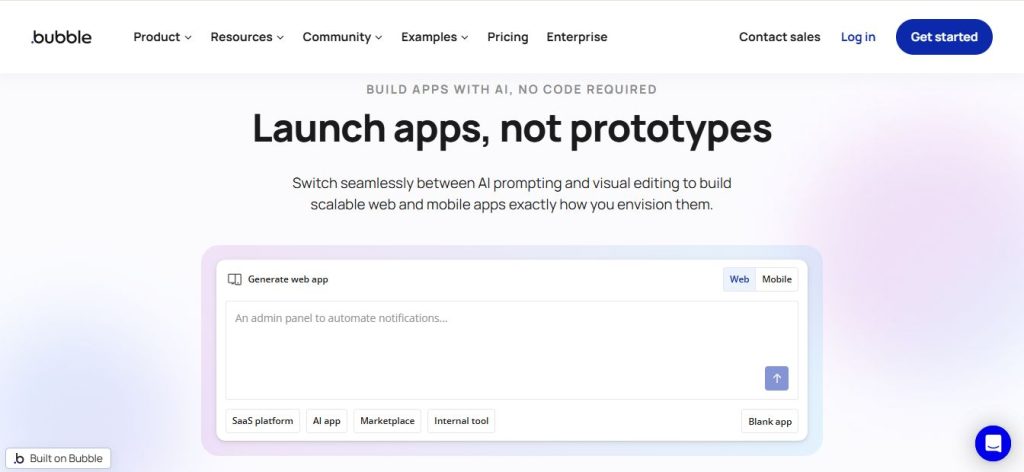
Looking ahead to 2026, Bubble introduces the groundbreaking “Bubble AI Agent,” empowering users to interact with the app’s editor through voice commands. This innovative feature streamlines the app development process by allowing users to build entire workflows or native mobile screens using intuitive “Vibe Coding” prompts.
Despite its impressive features, Bubble comes with a caveat – no code export functionality. Users are confined to the platform’s hosting services and Workload Unit (WU) pricing model, limiting flexibility in migrating projects.
2. FlutterFlow (The Native Performance Powerhouse)
When it comes to app development, FlutterFlow stands out as the native performance powerhouse among Bubble and Glide. Leveraging Google’s Flutter, it excels in delivering high-performance, visually appealing native apps for both iOS and Android platforms.
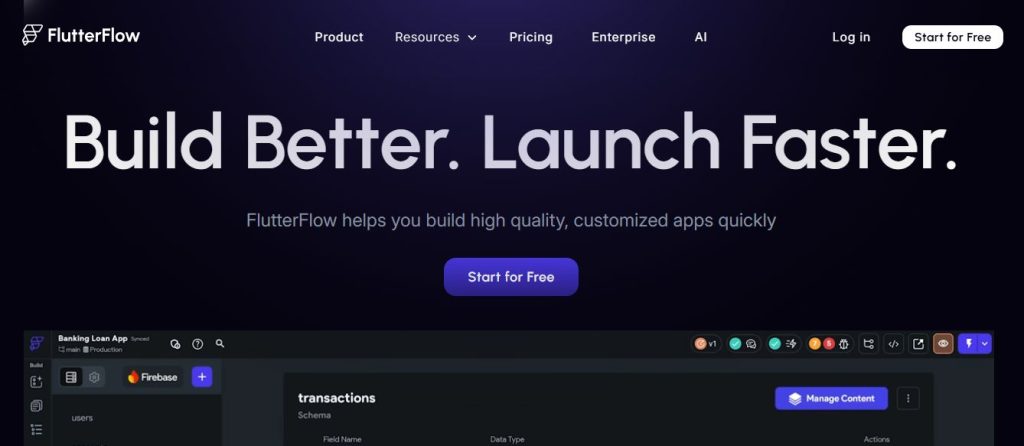
Looking ahead to 2026, FlutterFlow introduces “DreamFlow AI,” a revolutionary feature that simplifies the development process. With DreamFlow AI, translating a Product Requirement Document into production-ready UI and backend schemas becomes a seamless experience, setting it apart from its competitors Bubble and Glide.
Ideal for creating consumer-facing mobile apps requiring a strong presence on app stores, offline functionality, or device-specific features like GPS, Shaders, and Biometrics, FlutterFlow caters to diverse app development needs. However, a potential drawback is the prerequisite for a separate backend, such as Firebase or Supabase, which may pose challenges for beginners due to added complexity.
3. Glide (The Operational Speed King)
Glide emerges as the operational speed king among no-code app builders like Bubble and FlutterFlow. It easily transforms spreadsheets such as Google Sheets, Airtable, or Excel into sleek, professional applications within a remarkable timeframe of under 15 minutes.
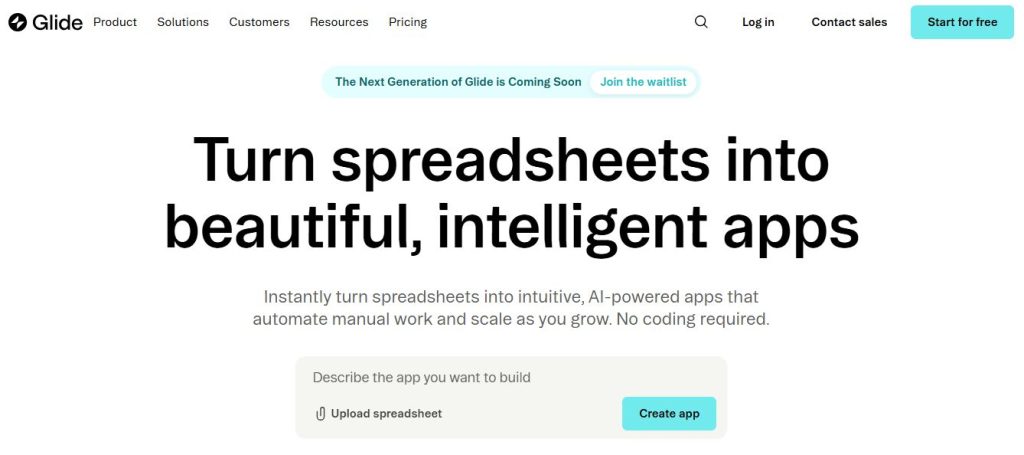
A standout feature set to debut in 2026 is the “Glide Agent,” an intelligent tool that autonomously analyzes your spreadsheet data and creates a personalized development roadmap. Alongside AI-powered columns that automatically summarize and categorize information, these advancements will help businesses streamline workflows and build smarter digital products. For companies investing in mobile app development services, these AI capabilities can accelerate development, improve user experiences, and enhance overall efficiency.
Glide excels in catering to various needs, making it an ideal choice for internal business tools, inventory management systems, customer relationship management platforms, and field-service applications. However, its primary focus on Progressive Web Apps (PWAs) may limit its compatibility with public App Stores. Additionally, the pricing structure, which is based on a per-user model, could prove costly for extensive user bases.
Comparison Table: Bubble vs FlutterFlow vs Glide
Here’s how the three compare at a glance:
| Feature | Bubble | FlutterFlow | Glide |
| Primary Platform | Web & Native Mobile | Native iOS & Android | Web (PWA) |
| Logic Complexity | Elite (Infinite) | High (with Low-Code) | Moderate (Standard) |
| Data Source | Built-in Database | External (Firebase/SQL) | Spreadsheet/SQL |
| Code Ownership | No (Platform Lock-in) | Yes (Full Export) | No (Platform Lock-in) |
| Setup Speed | Moderate | Moderate | Fastest |
| Best Asset | All-in-one Simplicity | Native Performance | Speed & Polished UI |
The “Smart Admin” Decision Framework
When comparing Bubble, FlutterFlow, and Glide in the “Smart Admin” Decision Framework for no-code app building, consider these key questions. If your app needs to be in the App Store, FlutterFlow shines; for web-based solutions, Bubble’s logic prevails. Determine your user base size – Glide suits small teams best, while Bubble excels with large public audiences. If owning the code is crucial, FlutterFlow offers the flexibility to transition to professional development teams, unlike Bubble and Glide, where you’re bound to their platforms.
In the Bubble vs. FlutterFlow vs. Glide debate analyzed in this blog post, understanding your app’s distribution needs, user base scale, and code ownership preferences is vital in making the right choice for your project’s success.
Conclusion: Build for the Future, Not Just Today
To build sustainable applications in 2026, it’s crucial to focus on long-term scalability and adaptability. While Glide excels in efficiency, FlutterFlow offers the advantage of ownership, and Bubble tackles complex projects effectively. Depending on your project’s urgency and scale, choosing the right platform is key. If you need an internal tool quickly, Glide is the way to go. However, for ambitious SaaS ventures, Bubble provides the robust framework needed for success. By aligning your choice with your project’s specific requirements, you can sidestep the common pitfall of having to rebuild from scratch due to initial tool limitations.
In the ever-evolving landscape of app development, the decision between Bubble, FlutterFlow, and Glide can make or break your project’s future viability. Understanding the strengths of each platform and how they align with your goals is fundamental to avoiding setbacks that many startups face. By making an informed choice based on your project’s immediate needs and long-term vision, you set yourself up for success and avoid the costly pitfalls of having to pivot or rebuild prematurely.
Frequently Asked Questions (FAQs)
There is no “one-click” migration. While you can move your data (CSV/SQL), you will have to rebuild the UI and the logic from scratch. This is why choosing the right tool on Day 1 is critical.
All three have native AI connectors. However, Bubble offers the most flexibility for complex AI “chains,” while Glide has the easiest “plug-and-play” AI columns for business tasks.
In 2026, no. Thanks to DreamFlow AI, you can generate the bulk of your app via chat. However, you will still need to understand the basics of “Collections” and “API Calls” more than you would in Glide.