

Video on Demand (VOD) has become one of the fastest-growing digital business models across industries. People no longer wait for scheduled TV broadcasts or fixed program timings. Instead, they expect content to be available instantly, whenever they want, wherever they are, and on whichever device they prefer.
This change has pushed businesses to build their own VOD platforms, whether it’s for entertainment, online learning, fitness programs, or corporate training.
However, the competition is massive. Having good content alone doesn’t guarantee success anymore. The real differentiator is the experience, how easily users can discover content, how smoothly videos stream, and how personalized the platform feels.
What Makes a VOD Platform “Smart”?
A smart VOD platform is one that continuously improves user experience using technology, data, and automation. Instead of functioning like a basic video library, it acts like an intelligent system that understands viewers and adapts to their behavior.
Personalization
Personalization is what keeps users watching longer. When a platform recommends content based on what a viewer has already watched, liked, or searched for, it reduces effort and increases satisfaction. Instead of forcing users to browse endlessly, personalization ensures they find relevant content quickly. Over time, this builds stronger engagement and increases subscription renewals.
Smooth Streaming
Even a small amount of buffering can cause users to leave. A smart platform uses optimized video delivery methods such as adaptive streaming and CDN distribution to ensure smooth playback. It automatically adjusts video quality based on the viewer’s internet speed, ensuring users can watch without interruptions.
Cross-Device Access
Modern users don’t stick to one device. They may start watching on mobile, continue on a laptop, and finish on a smart TV. Smart VOD platforms synchronize watch progress, login sessions, and recommendations across devices, delivering a seamless experience. This is essential for improving retention because it fits naturally into a user’s lifestyle.
Engagement and Retention-Focused Design
A smart platform is designed to keep viewers coming back. Features like watchlists, notifications, personalized content feeds, and content reminders create a habit loop. The platform becomes more than a streaming service, it becomes a daily part of the user’s routine.
Video on Demand Use Cases (Industries Using VOD Today)
VOD is no longer limited to movie streaming platforms. Many industries use video content to educate, train, and build paid communities.
Education & eLearning Platforms
Online education platforms rely heavily on recorded video content such as lectures, tutorials, and training modules. A strong VOD setup helps learners access lessons anytime and track progress. Features like subtitles, playback speed controls, and chapter-based navigation improve learning outcomes and user satisfaction.
Fitness & Wellness Platforms
Fitness businesses use VOD platforms to offer workout programs, yoga sessions, guided meditation, and nutrition coaching. These platforms often depend on subscription-based revenue, so they need strong retention tools such as personalized workout recommendations, daily reminders, and progress-based content suggestions.
Entertainment & OTT Media
Entertainment VOD platforms focus on delivering movies, web series, documentaries, and exclusive content. Success in this category depends heavily on content discovery. Platforms must highlight trending content, offer personalized recommendations, and support high-quality streaming across devices to compete with major OTT players.
Corporate Training & Internal Communication
Many businesses use VOD platforms internally to train employees and share important updates. Training videos, employee onboarding sessions, and compliance courses are stored securely and accessed by authorized employees. These platforms require strong access controls, private hosting, and detailed reporting dashboards to track employee engagement.
Religious/Community Streaming Platforms
Religious organizations and communities use VOD to share recorded sermons, sessions, and events. These platforms often grow through trust and community loyalty. Sharing features, accessibility options, and donation or subscription integrations become key components for long-term sustainability.
Essential Features Every Modern VOD Platform Must Have
Video on Demand Platforms should not feel like a random collection of videos. It must offer structure, convenience, and smart engagement tools that keep users active.
Content Library + Categories
A well-organized content library is the foundation. Videos should be categorized by topic, genre, language, difficulty level, or content type. Without proper organization, users struggle to find what they want and lose interest quickly. Smart categorization also improves platform navigation and increases viewing time.
Smart Search + Filters
Search functionality should go beyond basic keyword matching. A modern VOD platform must allow filtering by categories, popularity, upload date, duration, language, and even creator name. A strong search system reduces user frustration and helps users discover hidden content easily.
Watchlist + Continue Watching
These features directly impact retention. A watchlist allows users to save videos they want to watch later, increasing the chances they return. Continue watching ensures users don’t lose progress, making the experience feel seamless and professional, especially important for long content like courses or series.
Recommendations
Recommendations are what turn a platform into a personalized experience. A recommendation system can suggest content based on watch history, time spent, category interest, or similar user behavior. This keeps users engaged without needing them to search repeatedly, which increases platform loyalty.
User Profiles
User profiles allow personalization at the account level. This is useful for families, teams, or organizations where multiple people use the same platform. Each profile can have its own watch history, preferences, and recommendations, creating a tailored experience for every viewer.
Multi-Device Support
Users expect the same experience across mobile, desktop, and smart TV. A platform must support responsive design, optimized playback, and account synchronization across devices. This ensures users can access content wherever they are, improving engagement and reducing churn.
Low-Code/No-Code: The Fastest Way to Build a VOD Platform
Low-code and no-code development is becoming a popular approach because it reduces development time and makes it easier for businesses to launch quickly.
Why Businesses Choose Low-Code/No-Code Today
Many startups and businesses want to launch a VOD platform without spending months building everything from scratch. Low-code tools allow faster prototyping and MVP development, helping businesses test their idea in the market before investing in a full-scale system.
Best Use Cases (Admin Panel, Workflows, Marketing Automation)
Low-code tools are highly effective for building internal systems such as admin dashboards, subscription workflows, email automation, and user management. For example, businesses can quickly create systems that send subscription renewal reminders, manage user access, or trigger promotional offers without requiring deep coding.
Limitations (Streaming Infrastructure, DRM, Scalability)
While low-code is great for speed, it cannot fully manage core streaming technology. Video delivery requires CDN integration, adaptive streaming, security protocols, and DRM protection. Low-code platforms often struggle with performance optimization, large traffic scaling, and complex monetization setups.
Best Approach: Hybrid Development
The best strategy is to combine both approaches. Businesses can use low-code tools for operational workflows and dashboards while relying on custom development for streaming infrastructure, content protection, and platform scalability. This provides faster launch speed without sacrificing performance.
How SmartPHP Supports Low-Code + Custom Backend Integration
SmartPHP enables businesses with resources to build VOD platforms using a hybrid framework. It has a vast knowledge base and resources for scalable backend development and API integration, allowing businesses to connect low-code workflows with custom live streaming platform. This approach ensures flexibility, security, and future growth readiness.
Challenges Businesses Face When Building a VOD Platform
VOD platforms are powerful, but they come with major technical and business challenges that must be handled carefully.
Scalability + Bandwidth Cost
Streaming video is expensive because it requires large amounts of bandwidth and storage. As user traffic grows, infrastructure costs can rise quickly. A scalable architecture and CDN strategy are essential to ensure performance remains stable while keeping costs under control.
Content Discovery Issues
Many platforms fail not because content is bad, but because users cannot find it easily. Without proper tagging, recommendations, and search filters, even great content becomes invisible. Discovery is one of the biggest success factors for VOD retention.
Piracy and DRM
Piracy is a major threat, especially for premium content. Without DRM, tokenized access, and secure streaming URLs, content can be downloaded illegally and distributed. This reduces revenue and damages business credibility.
Retention and Subscription Churn
Subscription platforms face constant churn. Users cancel when they stop finding value. To reduce churn, platforms must continuously deliver personalized recommendations, fresh content, strong user engagement, and a smooth experience that makes users feel the platform is worth paying for.
The Technology That Powers Smarter VOD Experiences
Behind every successful VOD platform is a technology stack designed for speed, reliability, and scalability.
Cloud Hosting + CDN + Load Balancing
Cloud infrastructure allows platforms to scale quickly as traffic increases. CDNs distribute content across global servers so users can stream from the nearest location, reducing buffering. Load balancing ensures traffic is distributed evenly, preventing server crashes during peak demand.
Streaming Protocols (HLS/DASH)
Streaming protocols determine how video is delivered. HLS and DASH are widely used because they support adaptive streaming, meaning video quality adjusts automatically based on network speed. This ensures users can continue watching smoothly even with unstable internet.
API-First Backend + Database Optimization
A VOD platform requires a strong backend to handle user accounts, subscriptions, watch history, recommendations, and content management. API-first architecture ensures the platform can integrate smoothly with mobile apps, OTT apps, payment gateways, analytics tools, and on-demand solutions such as an Uber clone. Database optimization is essential to keep user experiences fast and responsive.
Security + DRM Protection
Security is critical for paid platforms. DRM solutions like Widevine and FairPlay prevent illegal downloads and unauthorized access. Token-based streaming ensures only valid users can play videos. Geo-restrictions can also be used to control access by region, supporting licensing requirements.
AI Automation (Recommendations, Tagging, Subtitles)
AI helps automate many functions that would otherwise require manual work. It improves recommendation systems, automatically tags content, generates subtitles, and predicts which content will perform well. AI-driven automation improves user satisfaction while reducing operational workload.
Monetization Models That Work
A VOD platform must have a monetization strategy that matches its audience and content type.
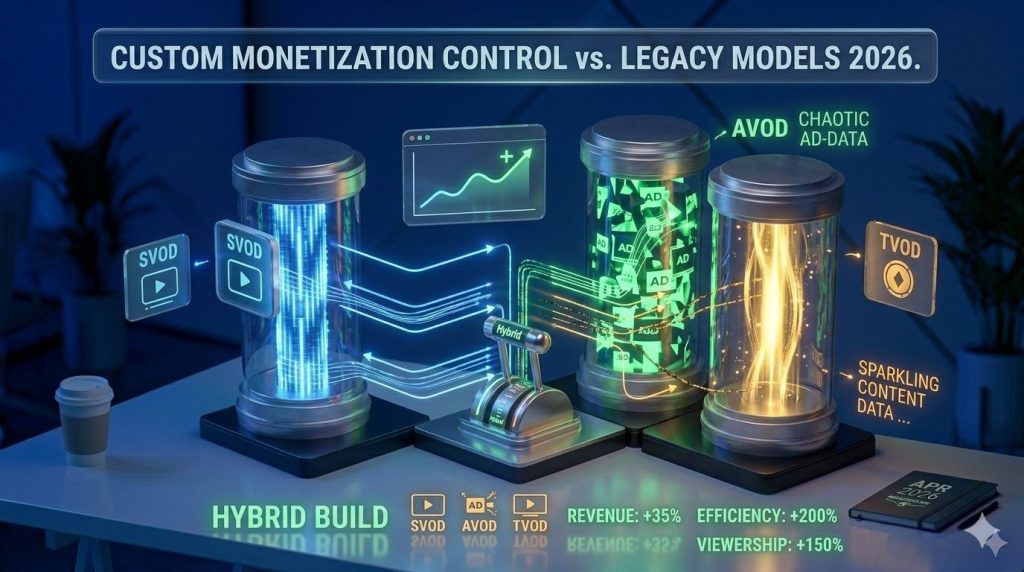
SVOD (Subscriptions)
Subscription-based models provide predictable recurring revenue. Users pay monthly or yearly for full access. This works well for platforms that deliver consistent content, such as education, entertainment, and fitness.
AVOD (Ads + Optimize Advertising Performance)
Advertising-based platforms allow free viewing while generating revenue through ads. The key to success is using analytics to optimize advertising performance, placing ads strategically, targeting the right users, and tracking engagement to improve conversion rates.
TVOD (Pay-Per-View)
Transactional models charge users per video, rental, or event. This is ideal for exclusive content, premium films, sports events, concerts, and special webinars. TVOD works best when content has high perceived value.
Hybrid Monetization Model
Many platforms use a hybrid approach, offering free content with ads while also providing premium subscriptions for ad-free access. This expands reach and increases revenue opportunities while keeping user entry barriers low.
Best Practices to Build a Successful VOD Platform
Build MVP First
Launching with a minimum viable platform reduces risk. Start with essential features like streaming, search, categories, and monetization, then expand based on real user feedback.
Focus on UX + Retention
A smooth user experience is more important than having too many features. Clean navigation, quick loading, and personalized recommendations directly improve retention.
Use Analytics to Improve Engagement
Analytics should guide decisions. Businesses should monitor watch time, drop-off rates, subscription conversions, and user activity patterns to continuously improve platform performance.
Keep Scaling Features Based on User Behavior
Instead of guessing what users want, platforms should scale based on actual usage. Features like gamification, interactive content, or community-based tools should be added when data proves they will increase engagement.
Conclusion
Video on Demand platforms are no longer just about delivering content. They are about building experiences that keep users engaged, connected, and loyal. Platforms that combine personalization, seamless streaming, strong discovery systems, and flexible monetization models are the ones that succeed.
If your business is planning to launch a VOD platform or upgrade an existing one, SmartPHP (smartphp.net) provides the scalable development resources needed to build a secure, high-performance, and future-ready solution.
Build your smart Video on Demand platform with SmartPHP’s extensive knowledge base and transform content into connections.
FAQ
VOD refers specifically to content that users can watch anytime on demand. OTT refers to delivering video content through the internet via apps or platforms, and OTT services often include VOD as a major component.
SVOD works best for premium long-term platforms, AVOD is ideal for high-traffic free platforms, and TVOD suits exclusive content. Many successful businesses use hybrid models for maximum revenue.
Most platforms use algorithms based on watch history, user preferences, viewing duration, and similar user behavior. AI improves these recommendations over time by learning what users engage with most.
Low-code is useful for building dashboards, workflows, and launching an MVP quickly. However, streaming performance, DRM security, and scalability typically require custom development.