

Imagine a world where creating high-conversion forms is as effortless as dragging and dropping elements on a digital canvas, requiring no prior coding knowledge. This isn’t a far-off fantasy but a vibrant reality in 2026, thanks to the rise of innovative no-code tools. These platforms have revolutionized the way businesses interact with their audiences, transforming tedious coding tasks into simple design processes anyone can master. Whether you’re a fledgling entrepreneur or a seasoned marketer, leveraging these tools can empower you to craft engaging forms that capture leads and boost conversions like never before.
The digital landscape is crowded, making it crucial for businesses to stand out with forms that not only look good but also function seamlessly. Gone are the days of frustrating technical bottlenecks and budget constraints holding back your creative ideas. With the best no-code tools for conversion forms at your fingertips, you gain the freedom to experiment, iterate, and optimize your lead-generation strategies swiftly and efficiently. As we delve into this fast-form guide, prepare to explore how these cutting-edge solutions are reshaping the approach to building impactful digital experiences.
Beyond the Submission Button: The 2026 “Predictive” Form Shift
In 2026, the traditional static form, complete with ten or more fields, has become a relic of the past. Marketers and product teams have realized that long, tedious forms are the number-one conversion killer. Every extra field increases friction and abandons potential leads. Enter predictive UX: forms that adapt in real time to user behavior, intelligently determining which questions to ask next and which to skip. This shift toward dynamic, AI-driven experiences has set a new standard for engagement and conversion.
Predictive forms leverage machine learning to analyze typing speed, scroll patterns, hesitation, and even time spent on individual fields. Based on these signals, the form surfaces the most relevant follow-up questions or terminates early with a streamlined submission. This progressive profiling approach ensures you collect the right data at the right moment, maximizing both completion rates and data quality. In essence, your forms transform from data collection chores into interactive, personalized journeys that drive higher conversions.
Top 7 No-Code Tools for High-Conversion Forms
With the predictive UX trends in full swing, selecting the right no-code tools for conversion forms is more important than ever. These platforms must not only offer intuitive drag-and-drop builders but also incorporate AI-driven logic, CRM integrations, and conditional workflows. Whether you need to qualify B2B leads instantly or create a brand-rich, conversational interface, the following seven tools represent the cutting edge in 2026.
From Orbit AI’s real-time lead scoring to Jotform’s AI-generated PDFs, each solution brings its own unique advantage. We’ll explore their flagship features, ideal use cases, and how they fit into a predictive, progressive-profiling workflow. By the end of this guide, you’ll know exactly which no-code platform aligns with your growth goals, budget, and technical requirements, ensuring your forms become powerful sales engines rather than forgotten tasks.
1. Orbit AI (The Lead Qualifier)
Orbit AI is built specifically for high-growth B2B teams that need to score and qualify leads instantly, without manual intervention. Its predictive algorithms analyze visitor metadata in real time, ensuring only high-value prospects progress through your pipeline. If you’re looking to supercharge lead generation with minimal fuss, Orbit AI delivers sophisticated lead qualification in a no-code interface.
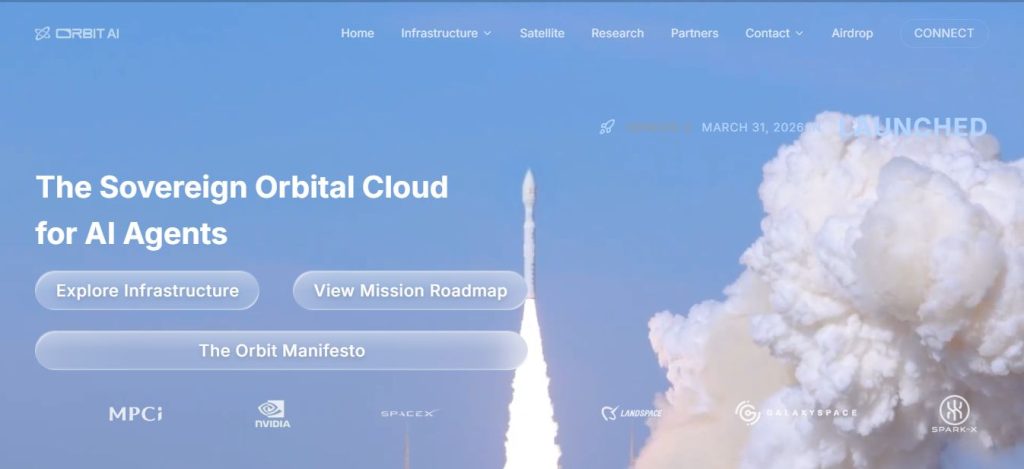
This tool integrates directly with popular CRMs, automates lead scoring workflows, and uses AI to tailor success pages based on company size, industry, or job title.
2. Typeform (The Conversational King)
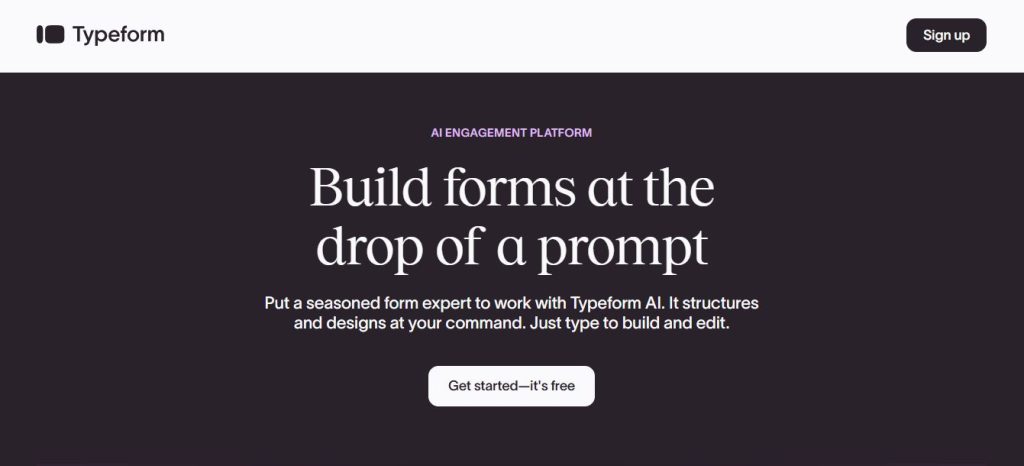
Typeform pioneered the one-question-at-a-time format, elevating forms from static documents to interactive conversations. In 2026, it’s enhanced with AI-driven video-ask capabilities, making it the go-to choice for teams prioritizing engagement and brand storytelling. Whether you’re capturing event RSVPs or gathering customer feedback, Typeform’s conversational UX keeps respondents hooked.
3. involve.me (The Funnel Specialist)
involve.me blurs the line between traditional forms and full-fledged landing pages, offering an all-in-one conversion funnel builder. Its strength lies in interactive quizzes, calculators, and product finders that immediately provide personalized outcomes. If you want to double as lead-gen form and mini-site, involve.me delivers the versatility of no-code with marketing automation baked in.
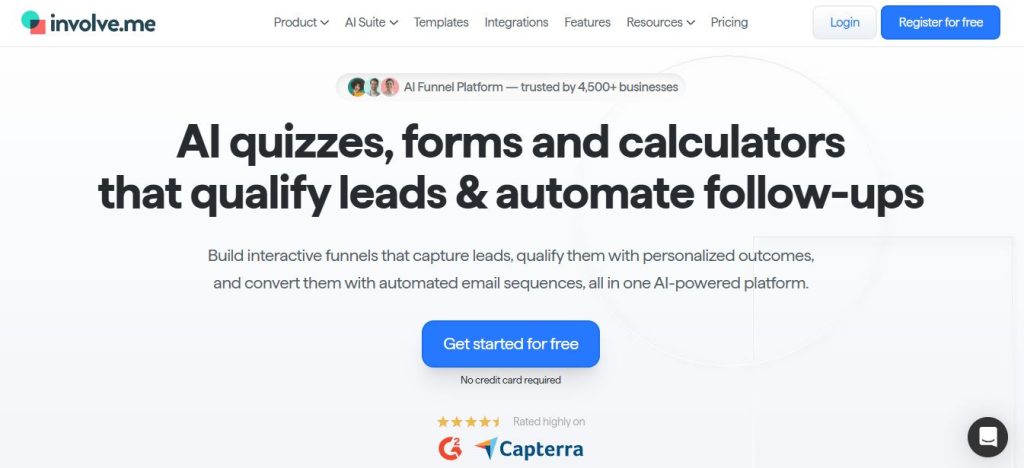
The platform’s drag-and-drop editor supports advanced outcome logic, templated quizzes, and built-in payment integrations.
4. Fillout (The Advanced Logic Specialist)
Fillout is the fastest path to building forms that connect to complex data sources like Airtable, Notion, or SQL databases. It offers enterprise-grade logic, webhook triggers, and API access, all in a no-code interface. For operations teams and data-driven businesses, Fillout provides the reliability and depth of a custom solution without the development overhead.
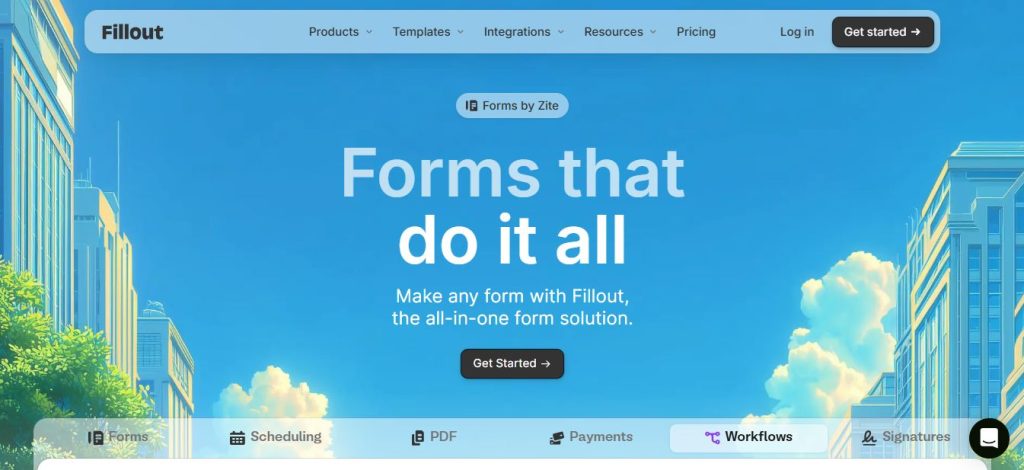
Its standout features include multi-page form state preservation and seamless database synchronization.
5. Tally (The Clean & Minimalist Choice)
Tally offers a Notion-like experience where you create forms simply by typing, instead of dragging blocks. Its minimalist interface and unlimited free tier make it perfect for rapid prototyping and solo entrepreneurs. Despite its simplicity, Tally packs powerful logic and integrations under the hood.
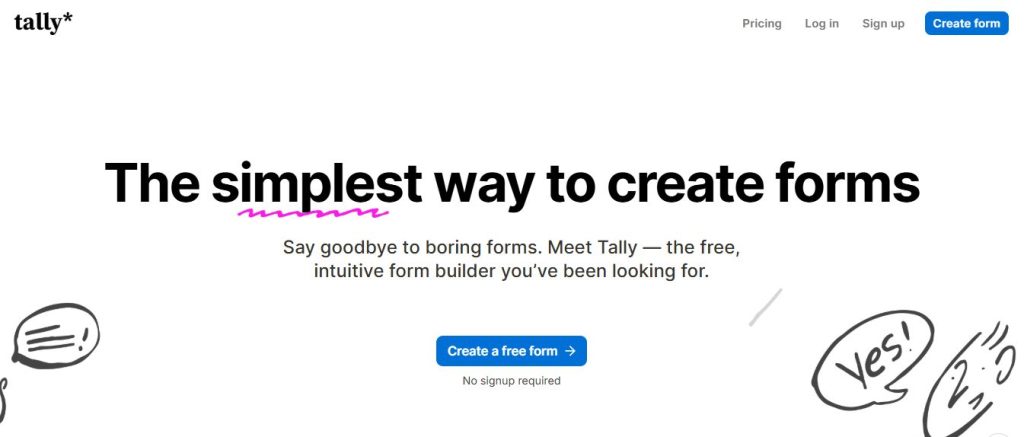
In this section, we’ll explore why Tally remains a crowd favorite among lean teams looking for speed and affordability.
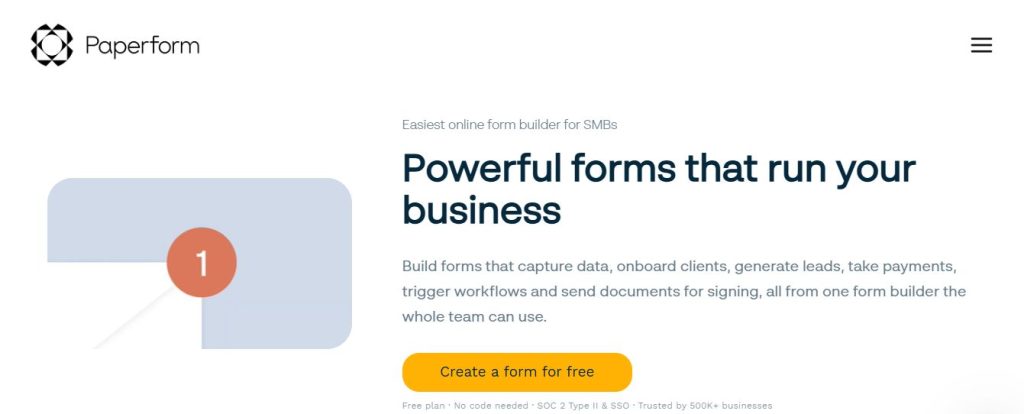
6. Paperform (The Doc-Style Builder)
Paperform transforms ordinary forms into beautiful, stylized documents or landing pages. With a rich text editor, custom fonts, and full design control, it’s like building a Canva document that just happens to collect data. This approach elevates forms to marketing assets, perfect for proposals, quotes, and branded intake forms.
7. Jotform (The Enterprise Powerhouse)
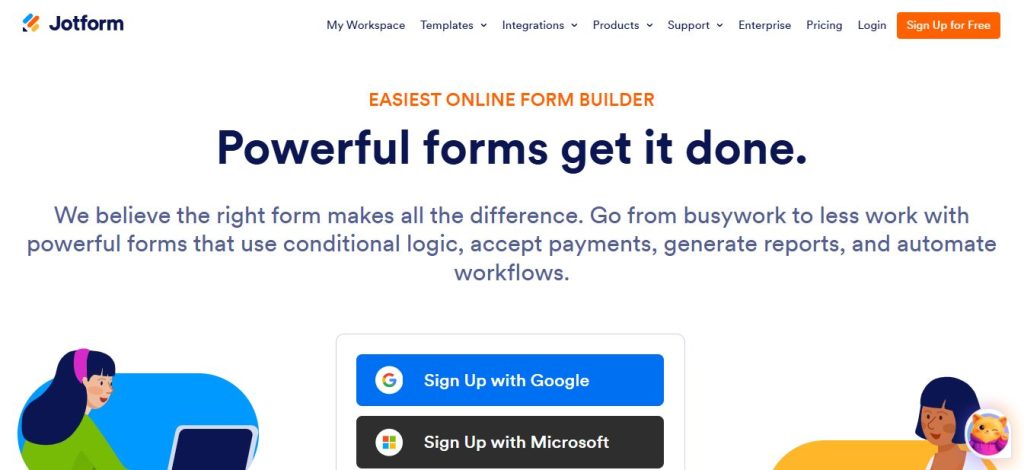
Jotform is the go-to solution for large organizations requiring extensive templates, advanced approvals, and regulatory compliance. With a massive template library and built-in workflow automation, it supports complex business processes out of the box. In 2026, its AI PDF Generator further elevates its enterprise appeal.
Comparison Table: Form Builder vs. App Builder
A common question in 2026 is: Do I need a form builder or a full app builder?
| Feature | Form Builder (e.g., Typeform) | Business App Builder (e.g., Bubble/Zite) |
| Primary Goal | Data Capture | Data Management & Logic |
| Setup Speed | Instant (Minutes) | Moderate (Hours/Days) |
| Logic Depth | High (Conversational) | Elite (Full Workflows) |
| User Accounts | Rare | Core Feature |
| Best Asset | Conversion Rate | Business Functionality |
The “Smart Admin” Form Checklist
To ensure your forms meet 2026 conversion standards, follow this Smart Admin checklist.
- First, eliminate friction by auto-populating data via Clearbit or Apollo integrations; never ask for information you already have.
- Second, apply the “conditional rule”: only show questions relevant to prior answers, preventing information overload and reducing drop-offs.
- Next, run a mobile speed test, 60% of conversions happen on smartphones, so your form must load instantly and avoid janky transitions.
- Finally, incorporate instant gratification: provide users with something of value upon submission, such as a guide, discount code, or personalized score.
These four steps transform forms from data drains into dynamic, conversion-boosting engines.
Conclusion: Your Forms are Your Best Salespeople
Stop treating forms as chores and start viewing them as your top-performing sales assets. By leveraging predictive UX and no code tools for conversion forms, you capture more qualified leads with less effort and higher engagement. Forms that adapt in real time not only gather essential data but also deliver personalized experiences that resonate with users.
For high engagement, we recommend starting with Typeform; if deep database integration is your priority, Fillout is the way to go. Embrace these tools to optimize conversion paths, nurture prospects effectively, and close deals faster, because in 2026, your forms truly are your best salespeople.
Frequently Asked Questions (FAQs)
If speed is your only metric, Tally or Jotform are the winners. You can have a live, professional form in under 60 seconds using their 2026 template engines.
If your form is just the “entry point” to a larger system (like a Client Portal), use Zite or Softr. These platforms treat forms as a native part of your business software rather than an “add-on.”
Bubble remains the most powerful for complex lead-gen “calculators” (like mortgage or ROI tools). However, for pure speed and native mobile conversion, Adalo or FlutterFlow are the 2026 favorites.