

When it comes to launching a startup in 2026, utilizing no-code platforms for MVPs can be a game-changer. These platforms offer a simplified way to create and test your minimum viable product without the need for extensive coding knowledge.
By leveraging the 11 best no-code platforms highlighted in this blog post, you can streamline your startup journey and bring your ideas to life quickly and efficiently. Whether you are a seasoned entrepreneur or a first-time founder, these platforms offer the flexibility and customization needed to prototype your product effectively.
Speed to Market vs. Scalability: The 2026 MVP Dilemma
In the fast-paced world of tech startups, the debate between speed to market and scalability has never been more crucial. The 2026 MVP dilemma encapsulates this challenge perfectly, especially with the emergence of the “Vibe Coding” revolution powered by AI.
The “Vibe Coding” Revolution: Gone are the days when building an app from scratch was the norm. Today, the focus has shifted towards describing your app’s functionality, thanks to AI technology.
Why an MVP isn’t a “Prototype”: This paradigm shift has redefined the concept of an MVP, emphasizing the need for real payments, robust data security, and a seamless user experience right from day one.
The Lock-in Trap: One key aspect that entrepreneurs need to consider is the lock-in trap. Smart admins understand the importance of choosing platforms that offer scalability and growth opportunities, rather than getting stuck with rigid templates that hinder future expansion. The ability to export code or seamlessly integrate new features is essential for long-term success in the competitive startup landscape.
The Top 11 No-Code Platforms for Startups
1. Bubble (The Full-Stack Heavyweight):
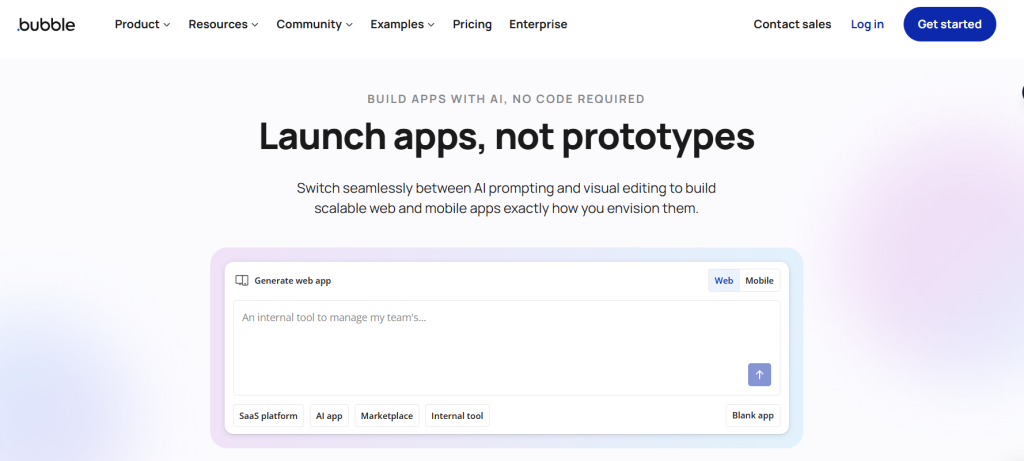
The Edge: Bubble, known as the full-stack heavyweight in the world of no-code platforms, continues to reign supreme for creating complex web applications with intricate logic and custom databases.
Smart Feature: Its standout feature, the “AI Page Generator,” sets it apart by streamlining the development process.
Best For: Imagine crafting a dashboard or a checkout flow – describe it, and Bubble constructs the elements and the logic workflows simultaneously. This seamless integration of design and functionality makes it a top choice for building sophisticated SaaS products and marketplaces.
In the landscape of no-code platforms, Bubble’s edge lies in its ability to handle intricate projects that require deep logic and personalized databases. Its AI-driven capabilities simplify the development process, making it ideal for startups looking to create robust MVPs efficiently.
2. FlutterFlow (The Native Mobile Choice):
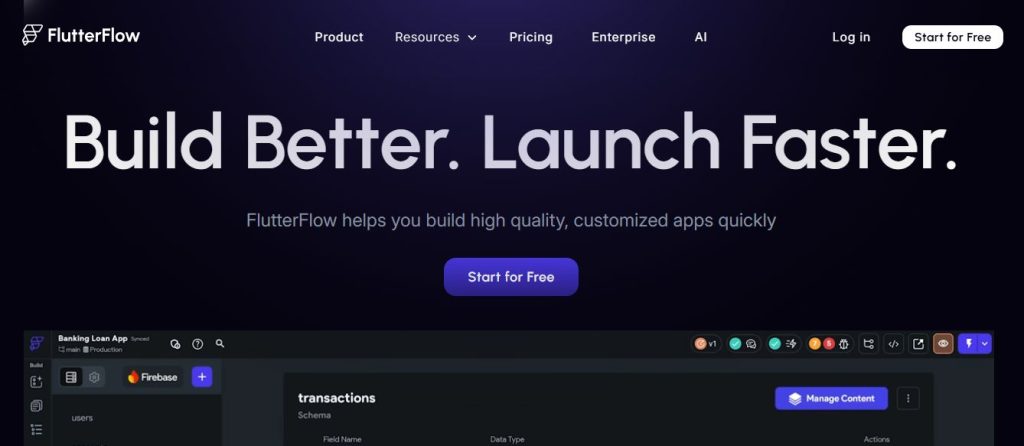
The Edge: FlutterFlow stands out as a top choice for developing high-performance native iOS and Android apps through Google’s Flutter framework.
Smart Feature: One of its key strengths is the “Code Export” feature, which sets it apart from most no-code tools. This feature allows users to download clean Flutter code, making it a versatile option for startups looking to transition to a “Pro-Code” team in the future.
Best For: When considering no-code platforms for MVP development in 2026, FlutterFlow emerges as an excellent choice for startups aiming to establish a strong presence on the App Store and Google Play. Its seamless integration with the Flutter framework enables rapid app development without compromising performance or quality.
For startups seeking to quickly launch their products and iterate based on user feedback, FlutterFlow‘s intuitive interface and robust capabilities make it an ideal solution. The ability to export code ensures that businesses have the flexibility to scale their app development efforts as needed, making it a valuable asset for long-term growth and success.
By leveraging Google’s Flutter framework, startups can create apps that not only look great but also perform seamlessly across different devices and platforms.
3. Softr (The Easiest “Data-to-App” Builder):
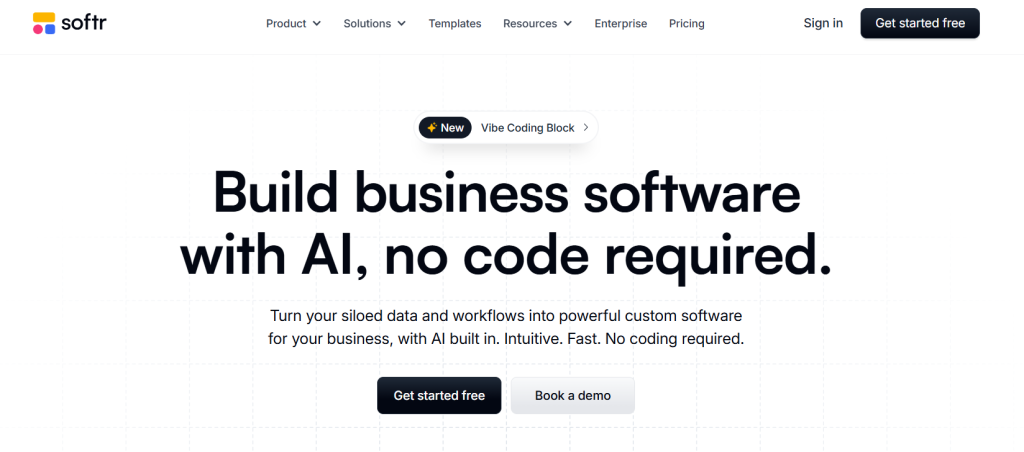
Softr stands out as the easiest “Data-to-App” builder in the market.
The Edge: It offers a significant edge by effortlessly transforming data from sources like Airtable or Google Sheets into fully functional web applications within minutes.
Smart Feature: One of Softr’s standout features is “Softr Workflows,” a smart tool powered by AI-driven logic. This feature streamlines and automates various business processes, such as member approvals, directly through the app interface. This automation brings efficiency and saves valuable time for users, making it an ideal choice for those looking to simplify their workflows.
Best For: Softr is particularly well-suited for creating client portals, internal tools, and simple directories. Its user-friendly interface and intuitive design make it a top choice for those looking to quickly launch a professional-looking web application without the need for extensive coding knowledge.
By leveraging Softr’s capabilities, entrepreneurs can focus on refining their ideas and reaching their target audience quickly and effectively.
4. WeWeb + Xano (The Scalable Duo):
WeWeb and Xano make a powerful combination in the world of no-code platforms.
The Edge: The Edge they provide is invaluable, decoupling the “Frontend” and “Backend” to mimic enterprise software development. This approach is ideal for founders aiming to scale their startups to millions of users without the need for a complete rebuild.
Smart Feature: One standout feature of this duo is the “No-SQL to Visual Mapper” offered by Xano. This smart feature leverages AI technology to assist users in mapping complex data relationships effortlessly, even without in-depth knowledge of database architecture. This capability simplifies the development process significantly, making it accessible to a broader range of users.
WeWeb excels in providing a user-friendly interface for building the frontend of applications, while Xano takes care of the intricate backend operations seamlessly. This seamless integration ensures a smooth workflow, enabling founders to focus on their core business strategies rather than getting bogged down by technical complexities.
Best For: Founders who have their sights set on rapid growth and scalability will find WeWeb and Xano to be the perfect partners in their entrepreneurial journey. By utilizing this scalable duo, startups can lay a robust foundation that can support their growth trajectory without the need for extensive reworks or restructuring.
5. Lovable (The “Vibe Coding” Leader):
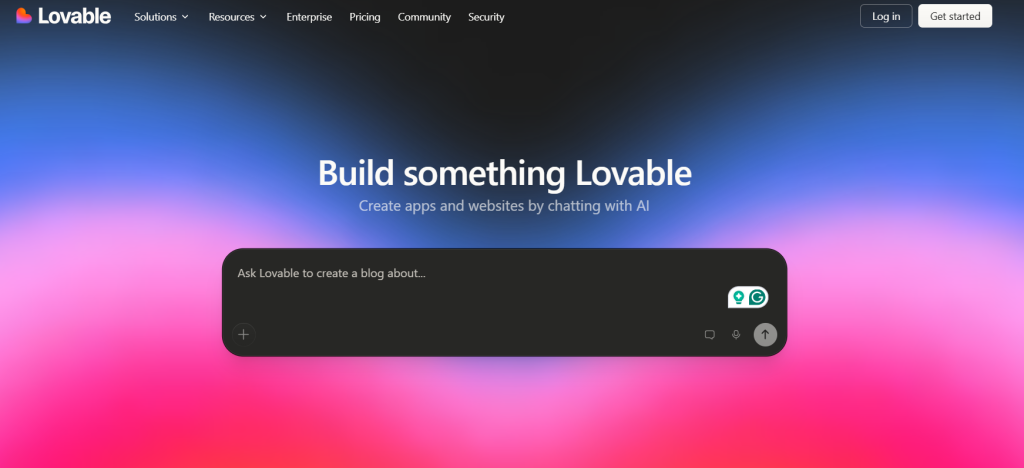
The “Lovable” no-code platform stands out as a leader in “Vibe Coding” in 2026.
The Edge: This innovative platform allows users to develop full-stack React applications through a user-friendly chat interface.
Smart Feature: One of its key features, “Iterative Chatting,” enables users to make real-time changes to their app simply by describing their requirements in the chat. For instance, a user can type, “Make the sidebar blue and add a LinkedIn login,” and witness the live app update instantly.
Best For: This tool is best suited for ultra-fast prototyping and creating minimum viable products (MVPs) in just one weekend. Its seamless integration of chat-based commands streamlines the development process, making it ideal for entrepreneurs looking to quickly validate their ideas and bring them to life.
6. Glide (The Operational Specialist):
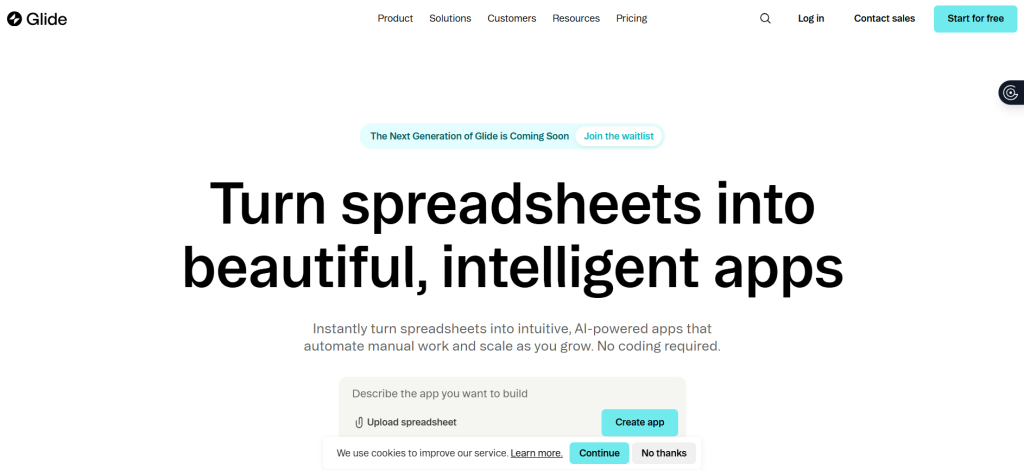
The Edge: When it comes to launching your startup in 2026, choosing the right tools and platforms is crucial for success. Glide, known as the operational specialist, offers a unique edge for businesses looking to create polished “Business Apps” effortlessly.
Smart Feature: One of Glide’s standout features is the “Glide AI Columns,” which revolutionizes data management by automatically summarizing information, extracting text from receipts, and categorizing leads directly within your data tables.
Best For: This smart feature streamlines processes, saving time and effort for MVPs in field services, inventory management, or logistics services like PostEx Logistics.
For startups aiming to make a strong impression with minimal design effort, Glide is the go-to platform. With its focus on creating visually appealing business applications, entrepreneurs can present their products and services in a professional and polished manner without the need for extensive design skills.
In a competitive market where efficiency and presentation are key factors for success, leveraging Glide’s capabilities can give startups the competitive edge they need to thrive. By incorporating this no-code platform into their tech stack, businesses can enhance their operational efficiency and deliver top-notch user experiences to their customers, setting the foundation for growth and scalability in the fast-paced startup landscape of 2026.
7. Adalo (The Native Component Expert):
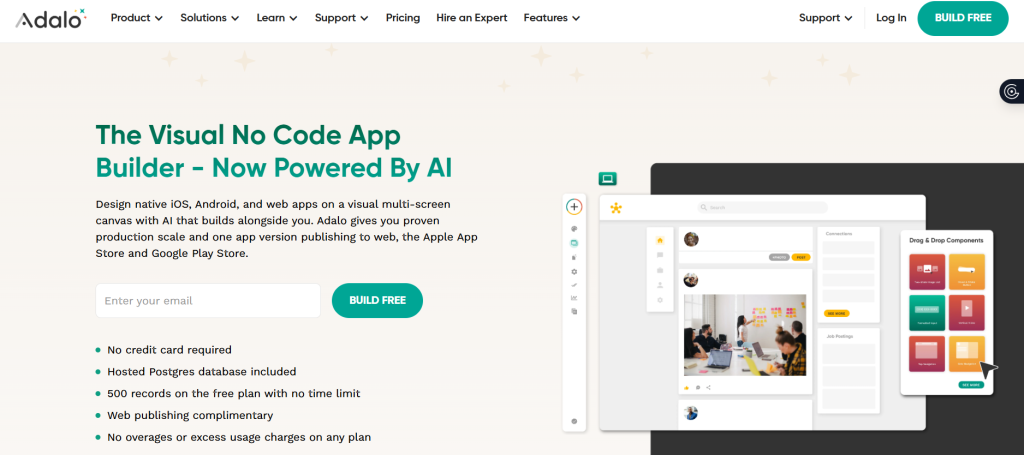
Adalo, known as The Native Component Expert, stands out for its innovative features that streamline the process of building native mobile apps.
The Edge: One of its standout capabilities is “The Edge,” which offers a user-friendly interface reminiscent of PowerPoint. This feature allows users to create mobile apps with ease using pre-made components, making the app development process efficient and intuitive.
Smart Feature: One of Adalo’s smart features, “Magic Start,” deserves special mention. This feature sets Adalo apart by automatically scaffolding the entire app structure, including screens and databases, in under 60 seconds. This rapid setup allows users to kickstart their app development process swiftly, saving valuable time and effort.
Best For: Adalo is particularly well-suited for local service apps and community platforms. Its versatile nature caters to a wide range of businesses looking to create user-friendly mobile applications without the need for extensive coding knowledge. Whether you are launching a local service app or a community platform, Adalo provides the tools and features necessary to bring your app concept to life efficiently, while local SEO services can help improve its visibility among your target audience.
Adalo emerges as a powerful tool for entrepreneurs and startups looking to launch their minimum viable products (MVPs) in 2026. With its intuitive interface, quick setup features, and compatibility with various business types, Adalo proves to be a valuable asset for those aiming to enter the mobile app market with innovative solutions.
8. NxCode (The AI Agent App Builder):
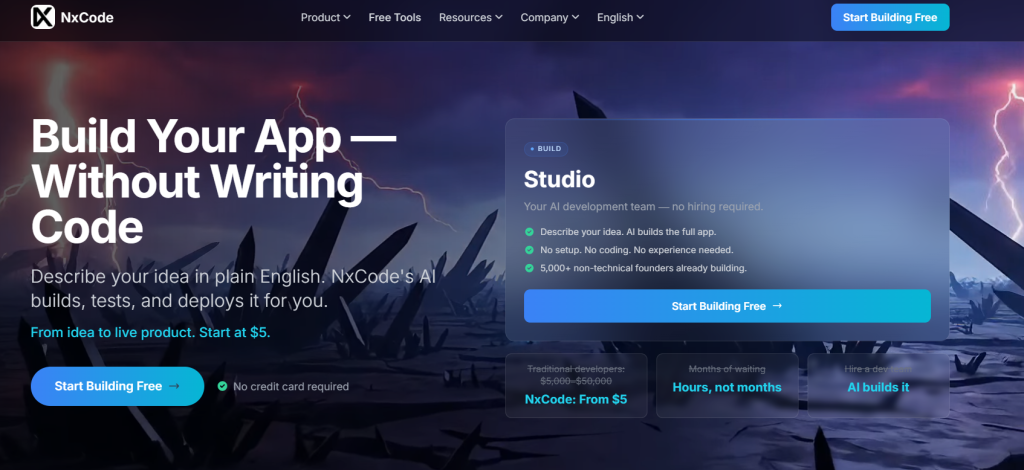
The Edge: NxCode is a revolutionary AI agent app builder that leverages the power of “AI Agents” to streamline the process of developing Next.js apps directly from natural language inputs.
Smart Feature: One of its standout features is the implementation of “Autonomous Testing,” where the AI not only generates the code but also conducts rigorous testing by simulating user interactions to detect and rectify any potential bugs even before the app is launched.
Best For: This cutting-edge platform is particularly suited for tech-heavy MVPs that prioritize high performance and require customized code outputs to bring their vision to life. By utilizing NxCode, startups can significantly expedite their app development process while ensuring a robust and flawless end product that meets the highest standards.
With NxCode at your disposal, the days of manual testing and debugging are a thing of the past. The seamless integration of AI not only accelerates the development cycle but also enhances the overall reliability and functionality of the apps created using this platform. Whether you are a seasoned developer or a budding entrepreneur, NxCode offers an intuitive and efficient solution to transform your ideas into reality seamlessly.
9. Replit Agent (The Developer’s No-Code Tool):
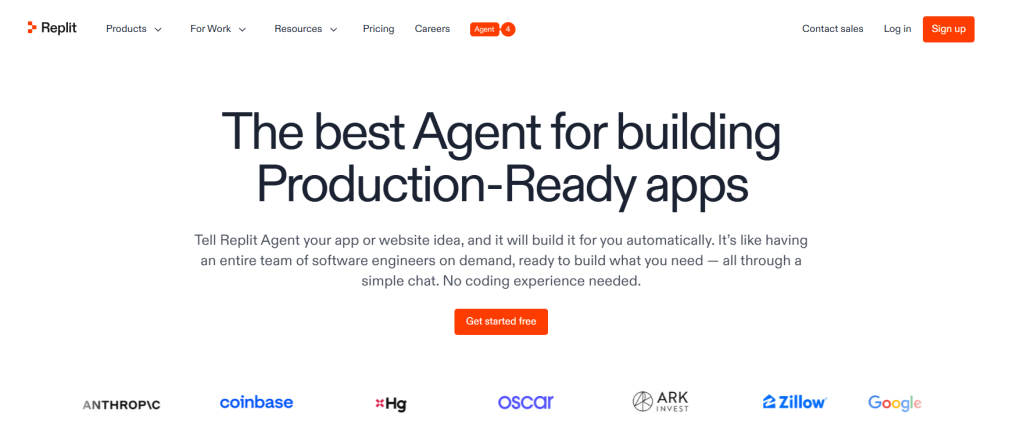
Replit Agent is a revolutionary tool for developers, offering a unique browser-based IDE experience.
The Edge: With the help of an AI “Agent,” developers can offload the heavy lifting of building full-stack applications onto the platform.
Smart Feature: One standout feature is the “Deployment Sandbox,” enabling users to seamlessly transition from an “idea” to a “live URL” within seconds, eliminating the need for complex server configurations.
Best For: This cutting-edge tool is particularly beneficial for founders aiming to maintain proximity to the code while enhancing their development speed by up to 10 times. The Replit Agent empowers users to focus on their innovative ideas and rapidly transform them into tangible products without getting bogged down by technical details.
In the fast-paced startup landscape of 2026, where time-to-market is critical, leveraging tools like Replit Agent can provide a significant competitive advantage. By streamlining the development process and facilitating quick deployment, startups can accelerate their MVP launch timelines and gain a foothold in the market sooner.
As one of the top no-code platforms for MVPs, Replit Agent caters to the evolving needs of tech entrepreneurs looking to bring their visions to life efficiently. With its user-friendly interface and advanced capabilities, this tool is poised to be a game-changer for startups embarking on their entrepreneurial journey in 2026.
10. Framer (The Design-First MVP):
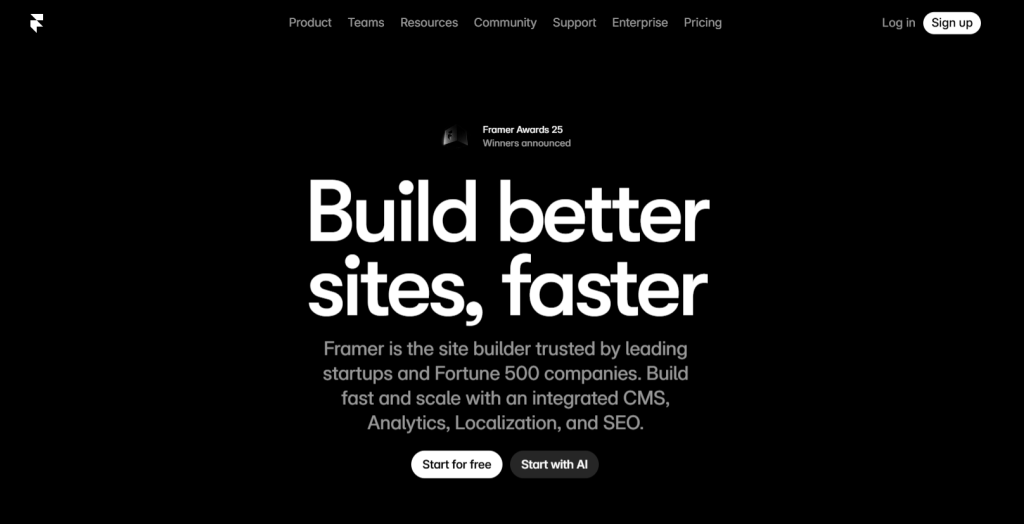
Framer stands out as a top choice among the 11 best no-code platforms for MVPs, especially for startups aiming for high-end marketing-led MVPs and landing-page-based projects in 2026.
The Edge: Originally conceived as a design tool, Framer has evolved into a robust CMS and site builder, elevating MVPs to the level of Apple-quality products.
Smart Feature: One standout feature that sets Framer apart is its innovative “Design-to-CMS” capability. This smart feature allows users to seamlessly convert a static Figma design into a dynamic, database-driven website with just a single click. This streamlined process significantly accelerates the development timeline, enabling startups to bring their ideas to life swiftly and efficiently.
Best For: Entrepreneurs seeking to create visually stunning MVPs that resonate with their target audience will find Framer to be a game-changer. By leveraging its intuitive interface and powerful functionalities, users can craft polished websites that exude professionalism and sophistication, akin to industry giants like Apple.
In conclusion, Framer’s transformation from a design tool to a comprehensive CMS and site builder has positioned it as a go-to platform for startups looking to make a lasting impression with their MVPs in 2026. With its revolutionary “Design-to-CMS” feature and focus on delivering high-quality results, Framer empowers entrepreneurs to realize their vision and launch successful, visually captivating projects with ease.
11. CodeConductor — Best for AI-Powered Full-Stack MVP Development
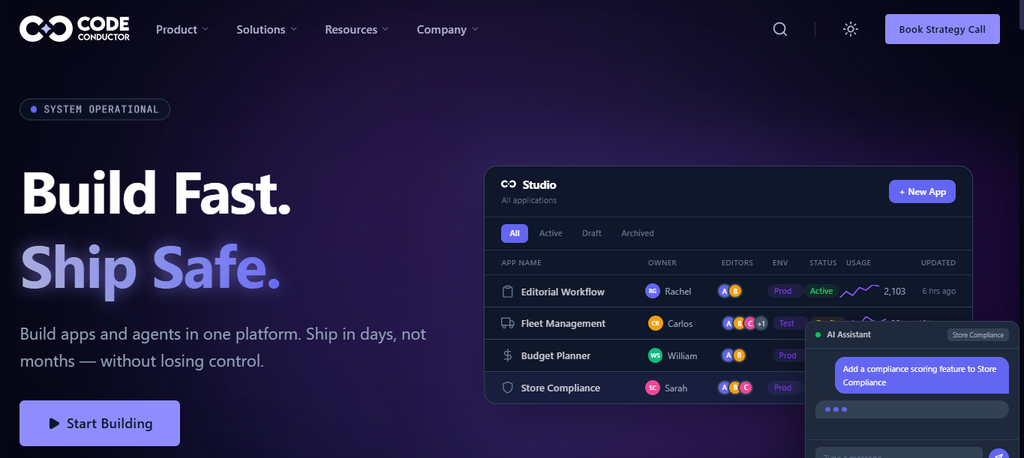
CodeConductor is an AI-powered software development platform that lets founders and teams build applications using natural-language prompts instead of writing every part of the code manually. It can generate and connect the frontend, backend, APIs, databases, and application logic from a single development workflow.
Unlike traditional no-code platforms that mainly rely on visual builders, CodeConductor focuses on prompt-based application development while giving teams more control over the underlying application and deployment environment.
Edge: Build full-stack applications from natural-language instructions while maintaining control over the generated application.
Smart Feature: Persistent application logic, integrated backend and frontend development, and deployment across environments such as cloud infrastructure, Kubernetes, VMs, private VPCs, and internal servers.
Best For: Startups, developers, and businesses that want to move quickly from an MVP idea to a production-ready application without being locked into a single hosting environment.
Why consider CodeConductor for an MVP?
- Build frontend and backend components through natural-language prompts
- Generate APIs and database functionality as part of the application
- Maintain application logic across development iterations
- Deploy to cloud, Kubernetes, VMs, private VPCs, or internal infrastructure
- Reduce dependence on traditional hand-coded development for initial MVP builds
- Move from an MVP toward a more customizable production application
Best for: Founders and teams looking for an AI-first alternative to traditional no-code MVP builders, especially when deployment flexibility and application control matter.
Comparison Table: Which MVP Platform is Your Foundation?
| Platform | Primary Use Case | Key AI “Smart” Feature | Learning Curve | Code Export? | Best For |
| 1. Bubble | Complex Web SaaS | AI Page & Logic Generator | Medium | No (Lock-in) | Founders needing deep custom logic. |
| 2. FlutterFlow | Native Mobile Apps | AI Screen Gen + AI Gen Code | Medium | Yes (Full) | Startups targeting App Stores. |
| 3. Softr | Portals & Directories | AI Business Workflows | Easy | No | Fast internal tools or client portals. |
| 4. WeWeb + Xano | Enterprise Web | AI Data Relationship Mapping | Hard | Yes (Front) | Scalable, data-heavy applications. |
| 5. Lovable | Full-stack React | “Vibe Coding” (Prompt-to-App) | Easy | Yes (Full) | Ultra-fast validation and prototypes. |
| 6. Glide | Operational Tools | AI Data Enrichment Columns | Easy | No | Logistics, Inventory, and Admin apps. |
| 7. Adalo | Simple Mobile Apps | “Magic Start” App Scaffolding | Easy | No | Local services and community apps. |
| 8. NxCode | Next.js Web Apps | Autonomous Agentic Testing | Medium | Yes (Full) | High-performance, tech-led MVPs. |
| 9. Replit Agent | Custom Software | Natural Language IDE Agent | Medium | Yes (Full) | Technical founders moving at 10x. |
| 10. Framer | Design-Led Sites | AI Design-to-CMS conversion | Easy | No | Landing pages and high-end portfolios. |
11. CodeConductor | AI-powered full-stack MVPs | Natural-language app development | Low–Medium | High | Founders and teams looking for an AI-first alternative |
The “Smart Admin” MVP Strategy:
When launching your startup in 2026, following a strategic approach like the “Smart Admin” MVP Strategy can significantly increase your chances of survival in the crucial first 90 days. This strategy emphasizes the importance of logic over mere vibes to steer your startup in the right direction.
1. Define the “One Metric”:
Instead of overwhelming yourself with a complex 50-page app, focus on building the one essential feature that demonstrates user willingness to pay. This approach helps streamline your MVP development process and keeps your initial product lean and user-centric. Once you’ve defined your core metric, the next step is driving consistent traffic to measure it effectively. Learning the fundamentals through an Introduction to SEO can help you attract the right audience without relying entirely on paid channels. Once you have the right SEO foundation, Outreach Empress can help with the link-building outreach needed to build your site’s authority.
2. Verify Data Portability:
Before fully committing to a no-code platform, ensure that you can easily export your data in CSV format. Data portability is crucial as it prevents your platform from holding your valuable information hostage, turning it from an MVP into a potential liability.
3. The “AI Guardrail” Test:
If you’ve employed AI technology in building your app, conduct manual tests on edge cases to anticipate potential issues. For instance, test scenarios like what happens if a user tries to use an emoji as a password. This proactive testing approach ensures that your app functions smoothly under various circumstances.
4. Cost Monitoring:
Given that many platforms in 2026 operate on “Usage-Based” pricing models, it’s essential to closely monitor your expenses. Implement budget alerts to avoid surprises, especially during a viral product launch, which could result in unexpected bills, possibly costing you thousands of dollars.
By incorporating these key strategies into your startup launch plan, you can navigate the complexities of the MVP phase more effectively, setting a solid foundation for your venture’s success in the competitive market of 2026.
Conclusion: Build Fast, But Build Smart
When it comes to building your Minimum Viable Product (MVP), speed is crucial. However, it’s equally important to build smartly, ensuring that your product is not just completed but validated in the market.
The Verdict: The ultimate goal of an MVP is not its completion but its validation by real users.
The Recommendation: For those looking to launch quickly, platforms like Lovable can be a game-changer. These tools offer a range of features that can help you get your product out into the market in no time. By utilizing such platforms, you can stop waiting for a developer and start engaging with your target audience.
On the other hand, if you aim to create a lasting legacy with your product, tools like FlutterFlow or WeWeb might be more suitable. These platforms provide robust functionalities and customization options that can help you build a more sophisticated and scalable product for the long run.
By choosing the right platform based on your specific needs and goals, you can streamline your MVP development process and ensure that you are not just building fast but building smart.
The Result: Remember, the key is to focus on validation rather than completion, and by leveraging the right tools, you can effectively communicate with your customers and iterate on your product for success.
Frequently Asked Questions (FAQs)
Yes. In 2026, the line between “code” and “no-code” has blurred. Many of these tools (like Lovable or Replit) generate high-quality React or Flutter code that is indistinguishable from hand-written code.
If you want a web app, start with Softr (easiest) or Bubble (most powerful). If you want a mobile app, Adalo is the most intuitive, while FlutterFlow is the most professional.
The top-tier platforms (Bubble, FlutterFlow, Xano) are SOC2 and GDPR compliant. However, as the “Smart Admin,” you are responsible for how you configure those privacy settings.