

Admins are increasingly expected to automate tasks without relying on developers for help. The year 2026 marks the rise of no-code API automation tools that empower admins to streamline processes efficiently. APIs have become the “admin superpowers”, enabling them to integrate systems seamlessly and execute complex tasks with ease.
In this guide, smart admins will learn about the top 10 no-code APIs that are essential for their toolkit in 2026. These APIs will revolutionize the way admins work by providing them with the capabilities to automate repetitive tasks, connect various applications, and enhance productivity.
Each API included in this guide is carefully selected to cater to the specific needs of admins looking to boost their efficiency and effectiveness in managing systems and workflows. By harnessing the power of these no-code APIs, admins can unlock new possibilities in automation and achieve greater agility in their daily operations.
With the rapid advancements in technology and the increasing demand for streamlined processes, admins who embrace these no-code APIs will stay ahead of the curve and position themselves as indispensable assets in their organizations. Stay tuned to discover the no-code APIs that every smart admin should know in 2026.
The Rise of the API-First Administrator
In the ever-evolving landscape of administration, the role of API-first administrators is gaining prominence. Moving beyond traditional methods, smart admins are leveraging the power of APIs to streamline workflows and enhance efficiency, including integrations with modern tools like a video API for seamless communication and collaboration.
Beyond the Dashboard: When it comes to scalability, relying solely on native plugin settings is no longer sufficient. The API-first approach allows administrators to customize and integrate various tools and applications, ensuring seamless operations even as the business grows.
Data Liquidity: Data liquidity plays a crucial role in modern administration. The ability to move information effortlessly between CRM systems, databases, and frontend applications is essential for maintaining a cohesive and interconnected workflow. APIs serve as the conduits through which data flows, enabling administrators to access, update, and transfer information with ease.
The 2026 Standard: Looking ahead to 2026, the standard for administration is set to be defined by AI agents that leverage specific APIs to autonomously carry out tasks. These intelligent agents can interact with various systems, retrieve and analyze data, and perform actions based on predefined parameters. By harnessing the capabilities of APIs, administrators can empower AI agents to work efficiently and independently, freeing up time for strategic decision-making.
1. OpenAI / Anthropic (The Intelligence API)
The OpenAI / Anthropic Intelligence API, also known as “The Intelligence API,” is revolutionizing how smart admins operate in 2026.
Orchestrating Logic with LLMs
By orchestrating logic with Large Language Models (LLMs), admins can automate various tasks like content moderation, sentiment analysis on support tickets, and generating dynamic user responses. This level of automation streamlines processes and enhances overall efficiency.
The Smart Admin Edge
One key feature that sets this API apart is its Smart Admin Edge. Through a technique called “Tool Calling,” the AI can autonomously decide when to trigger other APIs within the admin’s stack. This not only saves time but also ensures that the right tools are utilized at the right moment, maximizing the effectiveness of the entire system.
Imagine a scenario where a smart admin receives a high volume of support tickets. With the Intelligence API in place, content moderation can be automated to filter out inappropriate or sensitive content. Sentiment analysis can quickly identify urgent issues, allowing the admin to prioritize responses effectively. Additionally, dynamic user responses can be generated in real-time based on the nature of the query, providing a seamless user experience.
By leveraging the capabilities of the Intelligence API and integrating “Tool Calling” into their workflow, smart admins can stay ahead of the curve. This innovative approach to AI integration not only simplifies complex tasks. But it also empowers admins to make data-driven decisions with confidence.
2. Stripe (The Financial Infrastructure API)
Stripe, known as the Financial Infrastructure API, offers a wide range of functionalities beyond just processing payments.
More Than Just Payments
One key use case is its capability to assist in managing global tax compliance, issuing virtual corporate cards, and handling multi-tier subscriptions efficiently, and supporting ecommerce PPC campaigns by accurately tracking payments and customer conversions.
No-Code Implementation
For smart admins looking to streamline operations without diving into complex coding, Stripe‘s no-code implementation is a game-changer. By connecting Stripe webhooks to your WordPress site, you can instantly grant or revoke user access.
This seamless integration allows for swift and automated user management, ensuring a smooth experience for both administrators and users alike. With the power of Stripe at your fingertips, handling financial transactions and user permissions becomes a hassle-free process. Thus, empowering admins to focus on strategic initiatives rather than mundane tasks.
3. Twilio / Resend (The Communication APIs)
In 2026, Twilio‘s Resend API shines as a top choice for Smart Builders seeking multi-channel engagement at scale.
Multi-Channel Engagement at Scale
This powerful tool enables the seamless sending of automated WhatsApp appointment reminders and transactional emails. Thus, ensuring important messages reach recipients directly and bypass the dreaded spam folder.
One of the standout features of the Resend API is its ability to cater to the needs of “Smart Builders” who prioritize efficiency. With beautifully designed, React-based email templates, Resend offers a streamlined alternative to bulkier platforms like Mailchimp. This makes it the preferred API for those looking to create visually appealing communications without unnecessary bloat.
Why Resend in 2026?
For Smart Admins looking to leverage the full potential of communication APIs in 2026, Twilio‘s Resend stands out as a game-changer. Its user-friendly interface and robust capabilities make it a must-have tool for driving effective engagement strategies across multiple channels. Whether it’s sending personalized WhatsApp reminders or crafting eye-catching transactional emails, Resend empowers users to connect with their audience in a meaningful and impactful way.
4. Clearbit / Apollo (The Enrichment APIs)
Clearbit and Apollo are known as the Enrichment APIs. They offer a powerful solution for turning an email address into a detailed profile instantly.
Turning an Email Address into a Profile
Imagine a scenario where a lead signs up on your website. With these APIs, you can automatically perform email verification and fill CRM fields with crucial information such as company size, industry, and tech stack. This not only saves time but also ensures accurate data entry.
Automation Workflow
One practical application of this feature is through an automation workflow. By setting up a trigger to initiate an enrichment call via Make.com as soon as a new user is created in WordPress, you can streamline the data enrichment process seamlessly. This means that the moment a new user enters your system, their profile gets enriched with valuable details.
The beauty of utilizing Clearbit and Apollo in this manner is the efficiency they bring to your workflow. No longer do you need to manually research and input data for each lead that comes in. Instead, the automation takes care of it, ensuring that your CRM is always up-to-date with the most relevant information. This not only improves lead management but also enhances the overall user experience.
5. Plaid (The Financial Connectivity API)
Plaid, the Financial Connectivity API, is a powerful tool for building fintech solutions without the need for writing any code.
Building Fintech Tools Without Code
One interesting use case for this API is verifying bank balances, which can be particularly useful for high-ticket coaching programs or creating custom personal finance dashboards. By integrating Plaid into your platform, you can access real-time financial data securely and efficiently.
With Plaid, developers can easily connect with thousands of financial institutions, enabling seamless transactions and data retrieval. This level of financial connectivity opens up a world of possibilities for creating innovative fintech tools that cater to various needs.
For instance, imagine a scenario where a high-ticket coaching program requires verifying participants’ bank balances. With Plaid‘s API, this process can be automated, saving time and reducing the risk of errors associated with manual verification.
Similarly, individuals looking to build custom personal finance dashboards can leverage Plaid‘s capabilities to gather and display real-time account information. This not only provides users with a comprehensive overview of their finances but also simplifies the process of tracking expenses, setting budgets, and more.
6. Cloudinary (The Visual Media API)
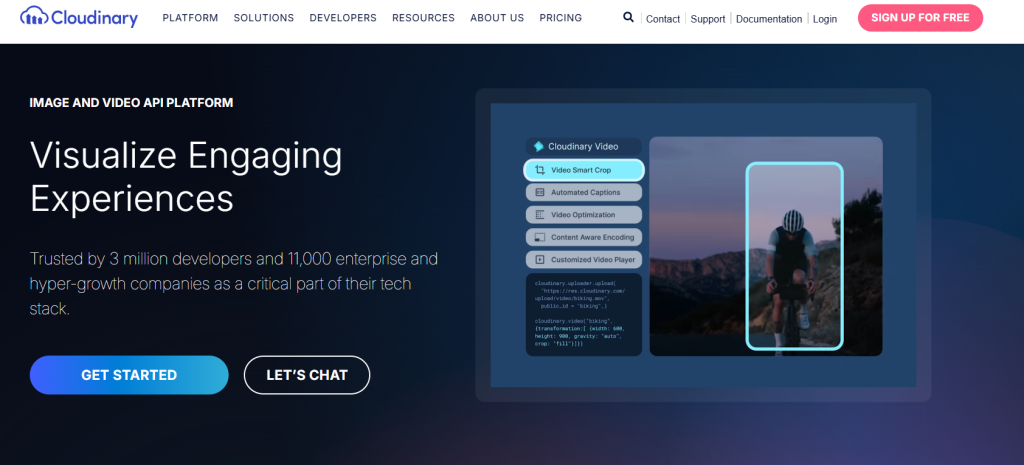
Cloudinary is a powerful Visual Media API that offers dynamic image and video optimization capabilities. With Cloudinary, users can easily auto-crop user avatars or serve WebP/AVIF images based on the user’s device, all through simple URL parameters.
Dynamic Image and Video Optimization
This feature is particularly useful for smart admins looking to enhance user experience without the need for complex coding. By leveraging Cloudinary’s capabilities, admins can ensure that images and videos are optimized for different devices and screen sizes, improving loading times and overall performance.
Auto-cropping user avatars using Cloudinary allows admins to customize images without manual intervention. By specifying parameters in the URL, such as width, height, or focus points, admins can automatically generate perfectly cropped avatars tailored to their platform’s requirements.
Furthermore, serving WebP/AVIF images based on the user’s device ensures optimal image quality and faster loading times. WebP and AVIF are modern image formats that offer superior compression and quality compared to traditional formats like JPEG or PNG. By using Cloudinary to detect the user’s device and serve the appropriate format, smart admins can deliver a seamless visual experience to their audience.
In conclusion, Cloudinary’s dynamic image and video optimization features provide smart admins with powerful tools to enhance their platforms effortlessly. By utilizing URL parameters for tasks like auto-cropping avatars and serving WebP/AVIF images, admins can deliver a superior user experience without the need for extensive coding knowledge.
7. Pinecone / Weaviate (The Vector Database APIs)
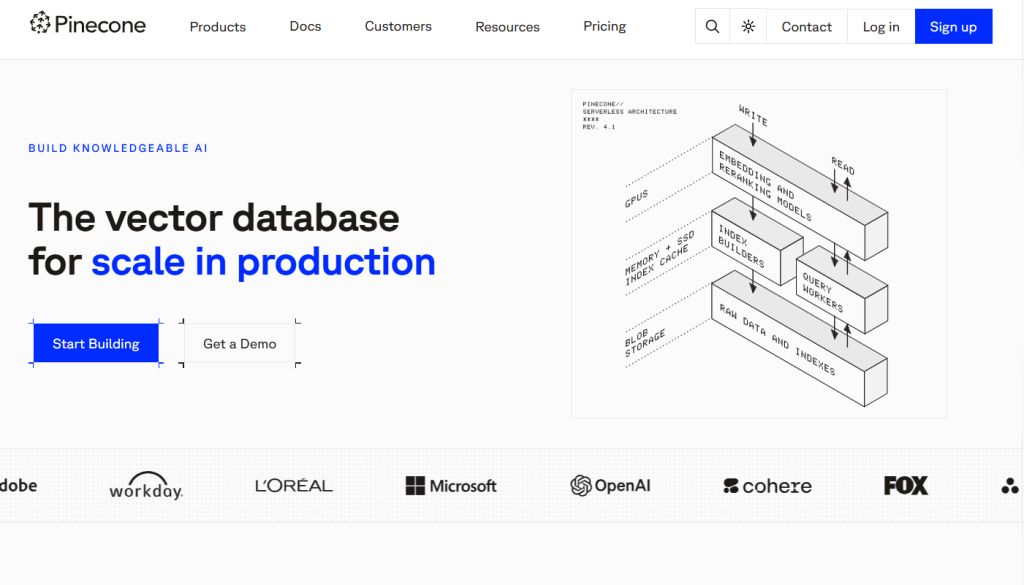
In the fast-evolving landscape of AI technology, Pinecone and Weaviate stand out as powerful Vector Database APIs that can serve as the memory for your business AI. These APIs are at the forefront of enabling businesses to leverage the power of vectors for efficient data storage and retrieval.
The Memory for Your Business AI
One compelling use case for these APIs is building a “Chat with your Documentation” feature where the AI exclusively accesses the information stored in your private business files. This functionality can revolutionize how businesses interact with their data, allowing for seamless integration between AI-driven chat interfaces and the wealth of knowledge contained within internal documents.
By harnessing the capabilities of Pinecone and Weaviate, businesses can unlock a new level of efficiency and intelligence in their operations. These APIs offer a sophisticated solution for storing and querying vector data, opening up endless possibilities for enhancing AI applications in various domains.
As we look ahead to 2026, the importance of utilizing cutting-edge APIs like Pinecone and Weaviate cannot be overstated. Smart admins who stay abreast of the latest developments in AI technology will undoubtedly recognize the value that these tools bring to the table.
With Pinecone and Weaviate as part of their arsenal, businesses can empower their AI systems to become more intuitive, responsive, and tailored to their unique needs. The future of AI-driven innovation is here, and it’s time for smart admins to embrace the potential of these game-changing Vector Database APIs.
8. Abstract / IPStack (The Geolocation & Utility APIs)
In the ever-evolving landscape of technology, one key aspect that has gained prominence is personalizing the user experience on a global scale. With the advancement of APIs like Abstract or IPStack, the ability to cater to individual user preferences based on their geolocation has become more seamless than ever.
IPStack, known for its Geolocation & Utility APIs, plays a pivotal role in enhancing the global user experience by offering valuable insights into a user’s location. By harnessing the power of IPStack, smart admins can effortlessly customize their platforms to automatically display relevant information tailored to each user’s specific location.
Personalizing the Global User Experience
A compelling use case of this functionality is the automatic showcasing of local currency or altering the language of a website based on a user’s IP address. This level of personalization not only enhances user engagement but also fosters a sense of connection and relevance for users across different regions.
In the dynamic realm of technology, staying abreast of innovative tools like IPStack is crucial for smart admins looking to elevate their platforms and deliver unparalleled user experiences. Embracing the capabilities of IPStack empowers admins to create a more user-centric environment that resonates with individuals on a global scale, ultimately setting the stage for enhanced user satisfaction and engagement.
As we look towards the future of technology in 2026 and beyond, the integration of user-centric APIs such as IPStack will continue to play a pivotal role in shaping the digital landscape. By leveraging the power of geolocation and utility APIs, smart admins can unlock a myriad of opportunities to personalize the global user experience, setting new standards for user engagement and satisfaction in the digital age.
9. BannerBear / Shotstack (The Automated Creative APIs)
Harnessing the power of automation in creativity, Bannerbear and Shotstack present themselves as the go-to Automated Creative APIs for generating visuals on the fly. These tools are a boon for smart admins looking to streamline their creative processes efficiently.

Generating Visuals on the Fly
One compelling use case for these APIs is in automatically creating social media “Open Graph” images for every new blog post. With just a few lines of code, admins can ensure that each post is accompanied by a visually appealing image optimized for social sharing.
Moreover, these APIs offer the flexibility to generate personalized video welcomes, adding a touch of sophistication to user interactions. This personalization can go a long way in enhancing user engagement and building brand loyalty.
By integrating BannerBear and Shotstack into their workflows, smart admins can stay ahead of the curve in content creation, ensuring a seamless and visually captivating experience for their audience.
In the fast-paced digital landscape of 2026, where creativity and automation reign supreme, these Automated Creative APIs are indispensable tools for any forward-thinking admin striving to make a mark in the virtual realm.
10. Webhook.site / Hookdeck (The Infrastructure Utility APIs)
Webhook.site and Hookdeck are two essential Infrastructure Utility APIs that every smart admin should be familiar with in 2026. Troubleshooting the “Glue” is crucial when integrating these APIs to ensure seamless operations.
Troubleshooting the “Glue”
One key use case is monitoring, queuing, and retrying failed API calls to prevent automation from breaking silently. By leveraging these APIs, admins can proactively address issues and maintain the efficiency of their systems.
Webhook.site offers a platform to inspect and debug webhook requests in real-time, enabling admins to track incoming data and ensure smooth communication between different services. On the other hand, Hookdeck provides advanced features for managing webhooks, such as intelligent retry mechanisms and error handling functionalities.
Troubleshooting the “Glue” refers to identifying and fixing any connectivity issues or misconfigurations between Webhook.site, Hookdeck, and other components of the infrastructure. This step is crucial to maintaining a reliable system that can handle failed API calls effectively.
By incorporating these APIs into their workflow, smart admins can streamline their processes, enhance monitoring capabilities, and minimize downtime. Monitoring failed API calls, queuing them for later processing, and implementing retry mechanisms are essential strategies to ensure the resilience of automation systems.
In conclusion, Webhook.site and Hookdeck play a vital role in the infrastructure of modern systems, offering powerful tools for admins to troubleshoot issues and maintain seamless operations. By understanding the importance of troubleshooting the “Glue” and implementing best practices for handling failed API calls, admins can create robust automation processes that drive efficiency and productivity.
Comparison Table: No-Code API for Admins
| API Tool | Category | “Smart” Use Case | Implementation Difficulty | 2026 “Edge” Feature |
| OpenAI / Claude | Intelligence | Automating complex logic & support. | Medium | Native Tool-Calling: AI can trigger other APIs autonomously. |
| Stripe | Finance | Global payments & tax compliance. | High (Custom) / Low (SureCart) | MoR Beta: Stripe now handles global sales tax filing for you. |
| Resend | Communication | High-delivery transactional emails. | Low | React-Email: Build beautiful, code-based templates without bloat. |
| Twilio | Communication | SMS, WhatsApp, & Voice automation. | Medium | Multi-Channel Orchestration: One API for 5+ chat platforms. |
| Clearbit | Enrichment | Auto-filling CRM data from emails. | Low | Real-Time Intent: Know when a company visits your site. |
| Plaid | Fintech | Connecting & verifying bank accounts. | Medium | FedNow/RTP Support: Real-time bank transfers for no-code apps. |
| Cloudinary | Media Utility | Automated image/video optimization. | Low | AI Face-Detection: Auto-crops avatars based on facial focus. |
| Pinecone | Data/AI Memory | Building custom “Knowledge Bases.” | High | Serverless Vector DB: Infinitely scale your AI’s private memory. |
| BannerBear | Creative | Auto-generating social/OG images. | Low | AI Template Generator: Build design templates via text prompts. |
| Hookdeck | Infrastructure | Queueing & retrying failed webhooks. | Medium | Error-Recovery AI: Automatically fixes & retries broken API calls. |
Conclusion: Become an Architect of Systems
By mastering these 10 no-code API for a smart admin, you can bridge the gap between being a mere “Web Designer” and evolving into a strategic “Smart Admin.” The ability to connect these 10 dots signifies a deep understanding of system architecture and the potential to drive innovation within digital landscapes.
Frequently Asked Questions (FAQs)
No. In 2026, tools like Make.com, Zapier, and n8n act as the visual translator between you and the raw API.
Never paste keys into the frontend of your site. Always use a “Secret Manager” or store them in your automation platform’s encrypted vault.
APIs restrict how many times you can call them per minute. A “Smart Admin” uses queuing tools like Hookdeck to handle traffic spikes.
Most offer a “Free Tier” or “Pay-as-you-go” model, meaning you only pay for the data you actually use as you grow.