

In the rapidly evolving digital landscape, the way we interact with technology is shifting dramatically, making complex processes simpler and more accessible to everyone. Imagine a world where creating robust APIs doesn’t require extensive coding knowledge; this once far-fetched idea is now a reality thanks to the rise of no-code API builders. As we venture into 2026, these innovative tools are not just gaining traction, they are revolutionizing the way businesses and individuals alike approach software development.
While traditional coding can often feel like a labyrinth of syntax and scripts, no-code API builders serve as a beacon of simplicity amidst this complexity. These platforms empower users from various backgrounds to construct, manipulate, and deploy APIs with ease, fostering a new era of digital creativity and efficiency.
Whether you’re a seasoned developer looking to streamline your workflow or a novice eager to bring your ideas to life, the best no-code API builders available in 2026 promise to be your ally in architecting a future where technology bends to your command. Join us as we explore the top contenders that are set to dominate this space and reshape the technological frontier.
Why Your API is Your Product in 2026?
In the ever-evolving landscape of technology, the significance of APIs as products cannot be understated. As we fast forward to 2026, it becomes evident that APIs are not just tools but the very essence of modern applications. They serve as the backbone, the foundation upon which the entire connected economy is built.
Modern applications are no longer standalone entities but are, in fact, “API Wrappers” around powerful logic engines, making the role of a software testing company essential for ensuring seamless performance. These APIs act as bridges, enabling seamless communication and interaction between different software systems. They provide the necessary infrastructure for businesses to innovate, collaborate, and thrive in a digital world. Businesses that rely on automation tools often integrate APIs with professional google adwords management services to monitor campaign data, automate reporting, and optimize advertising performance in real time.
When it comes to building APIs in 2026, a crucial decision lies in choosing between Logic Orchestrators like Make and Zapier or Data Powerhouses such as Xano and Supabase. The Smart Builder Strategy hinges on this choice, determining the efficiency and effectiveness of the API development process.
Furthermore, the advent of AI-Native APIs has revolutionized the way APIs are created and managed. In 2026, tools harness the power of Large Language Models (LLMs) to automatically generate endpoints, documentation, and security protocols. This automation not only streamlines the API building process but also enhances scalability and security.
In conclusion, as we navigate the technological landscape of 2026, it is imperative to recognize that APIs are not just tools but full-fledged products driving innovation and connectivity. By leveraging advanced technologies and strategic decision-making, businesses can architect a future where No-Code API Builders and AI Development Services play a central role in shaping the digital ecosystem.
Table of Comparison for Best No-Code API Builders
| Platform | Core Strength | 2026 “Smart” Feature | Self-Hosting? | Best Use Case | Pricing Logic |
| Xano | Complete BaaS | No-Code Branching: Visual dev/staging/prod. | No | Scalable SaaS Backends | Predictable: Tiered monthly sub based on features. |
| n8n | Orchestration | AI Agent Nodes: Built-in LLM logic. | Yes | Complex AI Workflows | Execution-based: Pay for what you run (or free if self-hosted). |
| Supabase | SQL-Powered | Vector Search: Native pgvector for AI memory. | Yes | Pro-Level DB Management | Storage-based: Pay for database size and users. |
| Make | Automation | Visual Flow Mapping: Infinite canvas logic. | No | Tool-to-tool connectivity | Operation-based: Pay per step in your workflow. |
| NoCodeAPI | Security Bridge | API Key Hider: Secure client-side calls. | No | Simple Data Fetching | Flat Fee: Simple plans for micro-services. |
1. Xano: The Gold Standard for Scalable Backends
Xano stands out as the gold standard for scalable backends, offering a comprehensive solution to building a complete server without the need for a dedicated DevOps team. With its unique “All-in-One” architecture, Xano combines the functionalities of a server, database, and API builder into a single visual canvas, simplifying the development process for no-code API builders in 2026.
Why it Wins in 2026? No-Code Branching and Merging
One of the key reasons why Xano emerges as a winner in 2026 is its no-code branching and merging capabilities. This feature allows users to manage their enterprise-grade software lifecycle effectively by visually organizing “Dev,” “Staging,” and “Production” environments. Say goodbye to app crashes during updates as Xano streamlines the deployment process with ease.
Moreover, Xano‘s AI-powered database migration sets it apart from other no-code API builders. By leveraging natural language to describe data requirements, Xano automatically constructs the relational schema, saving time and effort for developers and businesses alike.
Integration Edge: Powering Multiple Frontends
In addition, Xano‘s integration edge is evident in its ability to power multiple frontends seamlessly. Whether you’re setting up a Headless WordPress site or developing a FlutterFlow mobile app, Xano proves to be the ideal partner for achieving optimal performance and functionality in various frontend environments.
2. n8n: The High-Power Open-Source Orchestrator
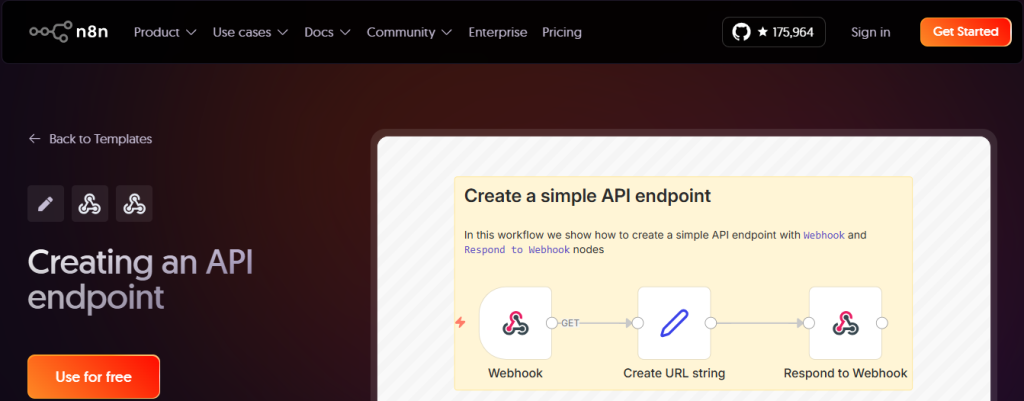
n8n is a powerful open-source orchestrator that offers unlimited flexibility through self-hosting options, making it a top choice for security-conscious builders who prefer to keep their data on their own servers.
The “Fair-Code” Growth Model
One of the key features that sets n8n apart is its “Fair-Code” growth model, which emphasizes transparency and fairness in its development process. This model ensures that users have access to advanced logic nodes such as “Loops,” “If/Else” branches, and “Wait” steps, enabling them to create intricate workflows that go beyond the capabilities of basic automation tools.
Moreover, n8n’s integration with LangChain and AI allows users to leverage native nodes for building AI agents that can read, think, and trigger API actions in a seamless sequence. This integration opens up new possibilities for automating complex processes and improving overall efficiency.
Cost Efficiency for High-Volume Workflows
In terms of cost efficiency, n8n proves to be a smart choice for high-volume workflows, as it eliminates the need for expensive third-party services like Zapier. This cost-saving aspect makes n8n an attractive option for apps that handle millions of requests without incurring the “Zapier Tax.”
Overall, n8n stands out as a high-power orchestrator that caters to the needs of developers and builders looking to streamline their workflows, enhance automation capabilities, and maintain control over their data.
3. Supabase: The Low-Code Powerhouse for SQL Lovers
Supabase, the low-code powerhouse for SQL lovers, emerges as the open-source alternative to Firebase, offering a seamless blend of PostgreSQL’s robust database capabilities with an intuitive no-code interface. Developers transitioning to no-code environments can find Supabase particularly appealing, as it combines the simplicity of no-code with the flexibility and control of SQL.
Real-Time Everything
One of Supabase‘s standout features is its real-time functionality, enabling users to experience instant API generation. By simply creating a table within the user interface, Supabase swiftly generates REST and GraphQL API endpoints, streamlining the development process significantly.
Furthermore, Supabase‘s incorporation of edge functions and vector search capabilities sets it apart in the realm of API builders. Leveraging native Postgres vector extensions, developers can implement innovative features like “Chat with your Data,” enhancing user experiences and data interactions within applications.
Best For: Developers Transitioning to No-Code
In essence, Supabase caters to teams seeking the efficiency of no-code development while retaining the power of SQL. With its emphasis on real-time operations, instant API generation, and advanced functionalities like edge functions and vector search, Supabase stands as a frontrunner in the evolving landscape of no-code API builders.
4. Make (formerly Integromat): The Visual Workflow Map
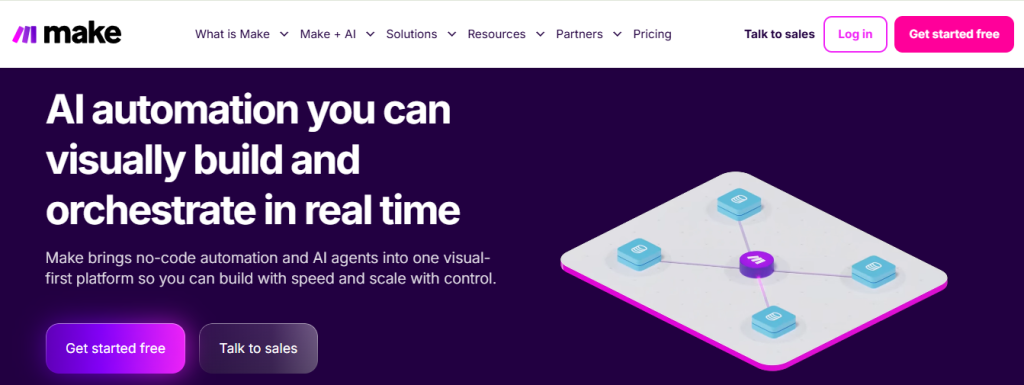
Make, formerly known as Integromat, is a powerful tool that offers a visual workflow map for creating intricate data movements. With an “infinite canvas” feature, users can easily track how data flows from one point to another, making it perfect for visualizing complex data movements.
The Webhook Mastery
One of Make’s standout features is its Webhook Mastery, allowing for instant data listeners. By using Make as a “Traffic Controller” between your WordPress site and external SaaS tools, you can streamline data flow and ensure seamless integration between platforms.
For error handling and debugging, Make offers the 2026 “DevTool” browser extension. This tool enables users to troubleshoot failed API calls in real-time, enhancing efficiency and minimizing downtime in data processes.
Best For: Rapid Prototyping and Complex Automations
Make is best suited for rapid prototyping and complex automations, especially when your application needs to communicate with multiple third-party services simultaneously. Its intuitive interface and robust features make it a top choice for developers and businesses looking to architect the future of data integration.
In conclusion, Make (formerly Integromat) stands out as a leading player in the world of no-code API builders in 2026. With its focus on visual workflow mapping, Webhook Mastery, and error handling capabilities, Make empowers users to create seamless data connections and automate complex processes with ease.
5. NoCodeAPI: The “Clean” Connector for Simple Backends
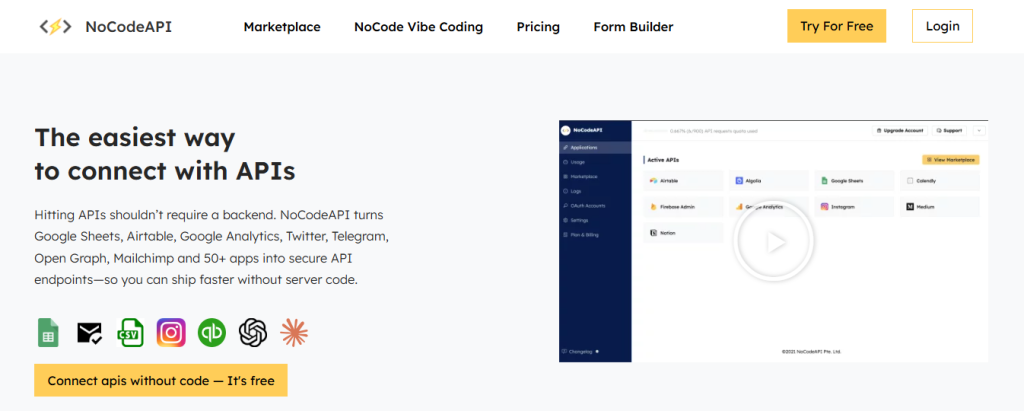
NoCodeAPI emerges as the perfect solution for simplifying backend processes without compromising on security. By effectively concealing API keys, it provides a seamless connection between your frontend and data sources.
Focused Utility
This tool focuses on utility, offering innovative ways to transform platforms like Google Sheets and Airtable into API endpoints with just a couple of clicks. The result? A secure and responsive JSON interface that streamlines data accessibility.
Moreover, NoCodeAPI boasts a diverse marketplace of connectors, enabling swift integrations with popular services like Instagram, Telegram, and Amazon S3. Say goodbye to tedious documentation readings, as this tool accelerates the process of connecting various platforms effortlessly.
Best For: Micro-SaaS and Single-Feature Apps
Ideal for micro-SaaS and single-feature applications, NoCodeAPI acts as a secure bridge for specific data needs. Whether you’re building a lightweight app or require a simplified server setup, this tool is tailored to cater to your requirements efficiently.
The “Smart Builder” Framework: Choosing Your API Stack
Determining Throughput: How many requests per second do you need?
When it comes to selecting the right API stack for your project within the “Smart Builder” framework, there are several key factors to consider. One crucial aspect is determining the required throughput, which involves understanding how many requests per second your application needs to handle efficiently. This factor heavily influences the performance and scalability of your API solution.
Data Sovereignty: Does your data need to stay on-premise (n8n) or in the cloud (Xano)?
Next, consider the aspect of data sovereignty, a critical consideration in today’s digital landscape. Ask yourself whether your data must remain on-premise, as supported by platforms like n8n, or if utilizing the cloud, as offered by Xano, is a viable option. Understanding your data sovereignty requirements is essential for compliance, security, and data management purposes.
Logic Depth: Is it a simple “A to B” sync, or a complex multi-branch logic tree?
Another vital consideration is the logic depth of your API integration. Are you looking for a straightforward “A to B” data synchronization, or do you require a more intricate multi-branch logic tree to handle complex workflows? The complexity of your logic requirements will dictate the flexibility and sophistication needed in your chosen API stack.
By carefully evaluating factors such as throughput needs, data sovereignty preferences, and logic depth requirements, you can effectively navigate the landscape of no-code API builders and make an informed decision that aligns with your project’s objectives and technical specifications.
Conclusion: Build for the Ecosystem, Not Just the Site
A robust API serves as the fortress around your business, safeguarding its core functionalities and data exchange mechanisms. When you build for the ecosystem, not just the site, you are essentially fortifying your business against potential threats and ensuring seamless integration with third-party applications and services.
No-Code API Builders play a pivotal role in shaping the future of digital architecture by offering intuitive tools and interfaces to create APIs without the need for extensive coding knowledge. By embracing these innovative solutions, businesses can enhance their capabilities to connect with a wider range of platforms and streamline their operations.
The significance of a robust API lies in its ability to act as a bridge between different software systems, enabling seamless communication and data transfer. This interconnectedness not only enhances user experience but also opens up new opportunities for collaboration and innovation within the digital landscape.
As businesses continue to expand their digital footprint and explore new avenues for growth, investing in a robust API infrastructure becomes paramount. By prioritizing the development of an ecosystem-friendly API, organizations can future-proof their operations and stay ahead of the curve in an increasingly interconnected world.
In conclusion, building for the ecosystem, not just the site, is essential for leveraging the full potential of No-Code API Builders and architecting a future-ready digital infrastructure. By viewing APIs as the “moat” around your business, you can enhance security, scalability, and interoperability, setting the stage for long-term success and innovation.
When it comes to building APIs in 2026, utilizing no-code builders versus custom development is a common dilemma for many businesses. Let’s address some frequently asked questions to help you make an informed decision.
Frequently Asked Questions (FAQs)
<!– wp:yoast/faq-block {"questions":[{"id":"faq-question-1771838150776","question":"1. Is it cheaper to build your own API or use a no-code builder?","answer":"No-code platforms, despite their monthly fees, can lead to significant cost savings. They typically eliminate $5,000–$15,000 in initial development costs and save hundreds of hours in maintenance compared to custom-coded solutions.","jsonQuestion":"1. Is it cheaper to build your own API or use a no-code builder?","jsonAnswer":"No-code platforms, despite their monthly fees, can lead to significant cost savings. They typically eliminate $5,000–$15,000 in initial development costs and save hundreds of hours in maintenance compared to custom-coded solutions.","images":[]},{"id":"faq-question-1771838163506","question":"2. Can these tools handle high-traffic spikes?","answer":"Leading platforms such as Xano and Supabase are engineered on top of robust Google Cloud and AWS infrastructure. This architecture enables them to auto-scale efficiently, just like bespoke backends, ensuring they can handle high-traffic spikes effectively.”,”jsonQuestion”:”2. Can these tools handle high-traffic spikes?”,”jsonAnswer”:”Leading platforms such as Xano and Supabase are engineered on top of robust Google Cloud and AWS infrastructure. This architecture enables them to auto-scale efficiently, just like bespoke backends, ensuring they can handle high-traffic spikes effectively.”,”images”:[]},{“id”:”faq-question-1771838176164″,”question”:”3. Are no-code APIs secure for handling sensitive data?”,”answer”:”Absolutely, as long as you opt for platforms that comply with industry-standard regulations like HIPAA, SOC2, or GDPR. Platforms such as Xano’s Enterprise tier or self-hosted n8n provide the necessary security measures to safeguard financial or medical data.”,”jsonQuestion”:”3. Are no-code APIs secure for handling sensitive data?”,”jsonAnswer”:”Absolutely, as long as you opt for platforms that comply with industry-standard regulations like HIPAA, SOC2, or GDPR. Platforms such as Xano’s Enterprise tier or self-hosted n8n provide the necessary security measures to safeguard financial or medical data.”,”images”:[]},{“id”:”faq-question-1771838228918″,”question”:”4. What if you decide to transition back to custom code?”,”answer”:”Most no-code API builders in 2026 offer comprehensive documentation like Swagger/OpenAPI and support data exports. This makes the transition back to custom code seamless, allowing you to hand over your logic to a developer with ease.”,”jsonQuestion”:”4. What if you decide to transition back to custom code?”,”jsonAnswer”:”Most no-code API builders in 2026 offer comprehensive documentation like Swagger/OpenAPI and support data exports. This makes the transition back to custom code seamless, allowing you to hand over your logic to a developer with ease.”,”images”:[]}]} –>
No-code platforms, despite their monthly fees, can lead to significant cost savings. They typically eliminate $5,000–$15,000 in initial development costs and save hundreds of hours in maintenance compared to custom-coded solutions.
Leading platforms such as Xano and Supabase are engineered on top of robust Google Cloud and AWS infrastructure. This architecture enables them to auto-scale efficiently, just like bespoke backends, ensuring they can handle high-traffic spikes effectively.
Absolutely, as long as you opt for platforms that comply with industry-standard regulations like HIPAA, SOC2, or GDPR. Platforms such as Xano’s Enterprise tier or self-hosted n8n provide the necessary security measures to safeguard financial or medical data.
Most no-code API builders in 2026 offer comprehensive documentation like Swagger/OpenAPI and support data exports. This makes the transition back to custom code seamless, allowing you to hand over your logic to a developer with ease.
As you navigate the landscape of No-Code API Builders in 2026, understanding these key points will empower you to architect the future of your API development process effectively.