

Imagine a world where your business’s entire SaaS stack syncs seamlessly, with every tool harmonizing effortlessly to boost productivity and streamline operations. In an era where digital transformation is paramount, businesses face the challenge of integrating myriad software applications. This can often feel like trying to solve a complex puzzle with pieces that stubbornly refuse to fit. The good news? Low Code Integration Platforms are here not just to fill the gaps but to transform the integration game altogether.
The promise of these innovative platforms lies in their ability to connect SaaS tools without the need for extensive coding expertise. By leveraging the power of low-code development, companies can swiftly build and deploy integrations, saving valuable time and resources. As we venture into 2026, it’s crucial to know which platforms stand out, offering the best internal tool-building capabilities. Let’s dive into the top five low-code integration platforms that will redefine how you sync your entire SaaS ecosystem, making your business more agile and efficient than ever before.
What is Low-Code Development? (The 2026 Definition)
Low-code development refers to a method of building software and automations using visual interfaces, drag-and-drop components, prebuilt templates, and graphical workflow designers. In 2026, this concept has matured beyond mere convenience tools for “citizen developers.” It now embraces “Agentic Orchestration,” where AI-powered agents collaborate with human logic. These platforms still rely on intuitive visuals for the 90% of routine tasks, but they also offer a “code escape hatch” for custom JavaScript or Python. This hybrid approach ensures you never lose the power of extensibility or control.
By adopting low-code, organizations can dramatically reduce the time to market for new integrations. They eliminate the overhead of traditional software projects, long sprints, extensive QA cycles, and heavyweight deployments. Instead, teams focus on high-value logic that can’t be fully abstracted by AI. This answers the critical question of what is low code development: it’s the sweet spot where no-code speed meets real code flexibility. In doing so, today’s Low Code Integration Platforms empower technical and non-technical users alike to build robust workflows without writing thousands of lines of boilerplate code.
Low-Code vs. No-Code (Defining the Spectrum)
At one end of the spectrum sits No-Code: an all-visual environment optimized for non-technical admins building simple landing pages, email automations, or CRM forms. It’s ideal when you need quick, linear flows and don’t expect to hit a complexity ceiling. The downside? You run out of options the moment you require a specific API call or advanced error handling. That’s where Low-Code Integration Platforms step in as the “Smart Admin” solution, blending no-code ease with a custom code “escape hatch.”
This spectrum allows teams to choose the right balance of speed and extensibility. For routine tasks, email notifications, lead scoring, and data syncing, pure no-code suffices. But for anything beyond trivial logic, low-code reigns. It brings the best of both worlds: drag-and-drop speed for 90% of the workflow and the ability to drop into a JavaScript or Python snippet for that final 10% of complex logic. In 2026, choosing between low-code and no-code is not a binary choice but a strategic decision about scalability, maintainability, and long-term platform governance.
The Top 5 Low-Code Integration Platforms of 2026
With so many options on the market, selecting the right low-code integration platform can feel overwhelming. Each tool brings its own strengths, unique features, and pricing models. Some excel at connecting SaaS tools with zero coding, while others empower developers with open source flexibility. In the following sections, we’ve distilled the leaders in low-code automation, platforms that shine in ease of use, extensibility, and AI-driven workflows.
Whether you’re searching for the universal connector that links thousands of apps, a visual logic master for complex processes, or a self-hosted solution for privacy-conscious teams, this list covers the best internal business apps and best internal tool builders available today. Read on to discover which platform aligns with your operational needs and growth plans as your organization scales in 2026.
1. Zapier (The Universal Connector)
Zapier continues to dominate the low-code integration platform arena with its vast library of over 8,500+ integrations. It positions itself as the universal connector, allowing businesses to link virtually any SaaS tool, CRM, email marketing, project management, and more, without writing a line of code. Its intuitive interface makes it a go-to choice for teams looking to automate repetitive tasks and free up valuable developer time.
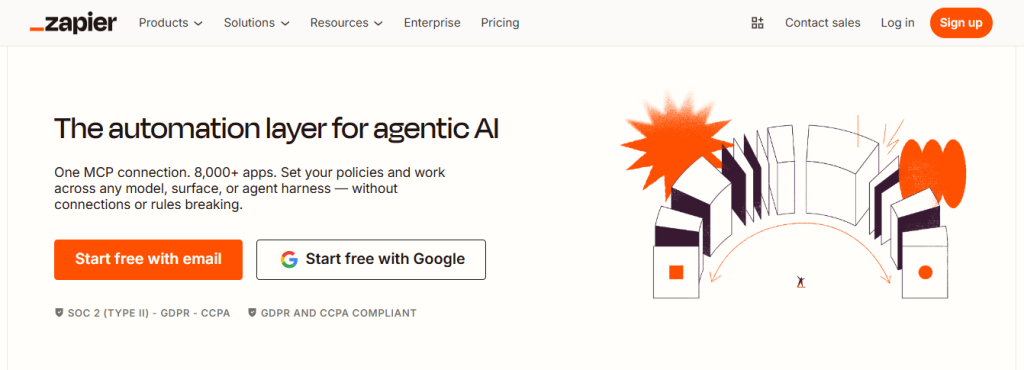
In 2026, Zapier has evolved to include AI-driven orchestration through “Zapier Central,” transforming it into more than just a trigger-action engine. Whether you’re a seasoned developer or a non-technical admin, Zapier remains remarkably approachable, enabling everyone to build complex workflows in minutes.
2. Make (The Visual Logic Master)
Make (formerly Integromat) distinguishes itself with an “infinite canvas” for visual workflow design. Unlike linear builders, Make lets you map out complex, multi-branching processes on a single screen. This bird’s-eye view is invaluable for operations managers orchestrating end-to-end business processes.
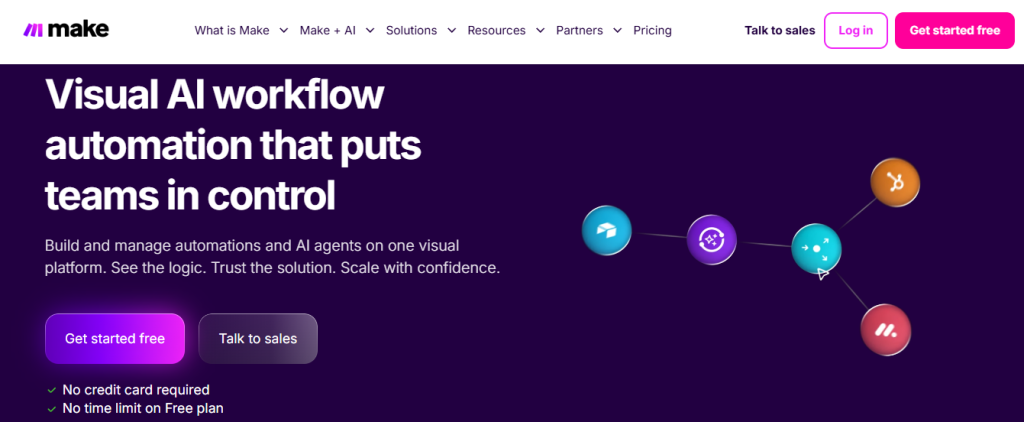
In 2026, Make’s standout feature is its AI-driven “Scenario Assistant,” which suggests optimal logic paths based on your goals. Combined with robust data transformation tools, Make remains one of the top Low Code Integration Platforms for teams that need to see the full workflow at a glance.
3. n8n (The Fair-Code Powerhouse)
n8n stands out as the open-source alternative for teams demanding full control. You can self-host n8n, ensuring sensitive data never leaves your servers. Its fair-code license strikes a balance between community contributions and enterprise features, making it a compelling option for privacy-conscious organizations.
In 2026, n8n’s standout smart feature is “LangChain Native Nodes,” designed for building AI agents that perform document summarization, code generation, and private database queries. If you seek both extensibility and data sovereignty, n8n is your go-to low code integration platform.
4. Pipedream (The Developer’s Integration Secret)
Pipedream takes a component-based approach, where each step in an automation is a reusable code snippet. This modularity lets developers craft highly customized workflows while still leveraging a low-code interface for orchestration. The platform supports JavaScript, Python, Go, and more, making it a playground for engineering teams.
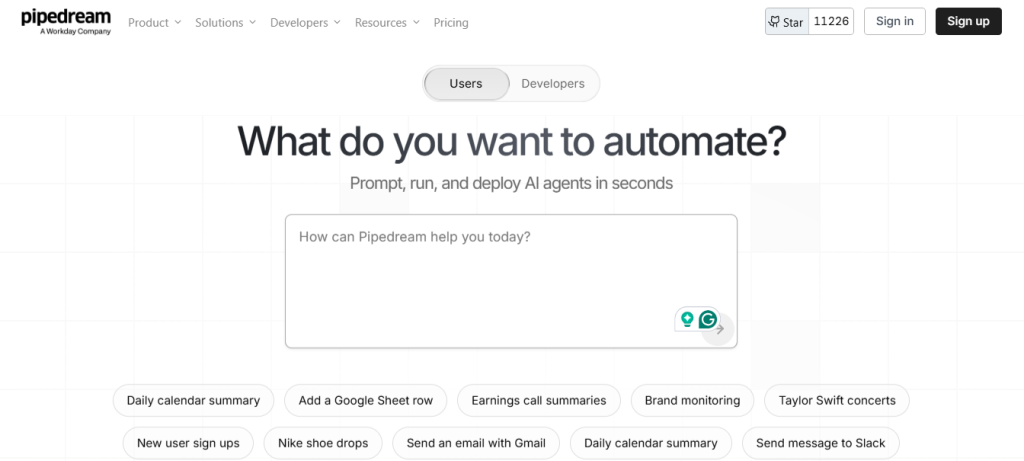
Its standout 2026 feature, “Instant API,” turns any integration into a live API endpoint with one click. This means your automations can be invoked by external systems like webhooks or microservices, effectively blurring the line between integrations and custom software.
5. Retool (The Internal App Heavyweight)
Retool is the go-to platform for building custom internal dashboards and business applications. Rather than focusing solely on moving data, Retool excels at presenting it. You can drag and drop tables, charts, forms, and maps, then bind them to any REST API, GraphQL endpoint, or database query. This makes it one of the best internal tool builders available.
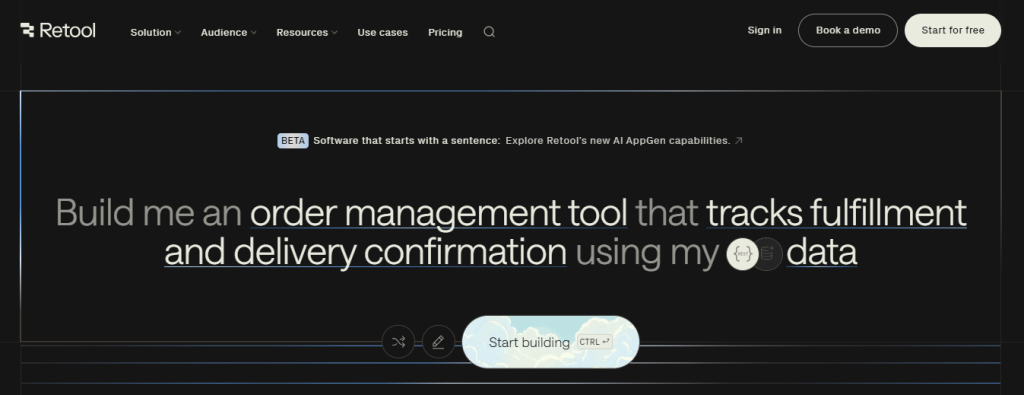
In 2026, Retool’s “Vectors” feature allows native integration with vector databases, powering internal apps that can chat with proprietary data. This elevates Retool from a dashboard builder to a conversational interface layer for your organization’s knowledge base.
Comparison Table: Choosing Your Integration Engine
Your integration engine choice should align with your organization’s priorities. If you value rapid self-service automation and a massive connector ecosystem, Zapier or Make may be your best bet. For privacy-minded teams with in-house dev expertise, n8n delivers unparalleled control. Pipedream is the secret weapon for engineering-led automation, and Retool stands out as the heavyweight for bespoke internal dashboards.
| Platform | Focus | Best Asset | Pricing Model (2026) | Coding Required? |
| 1. Zapier | Breadth | 8,500+ App Ecosystem | Per Task | None (Optional) |
| 2. Make | Visual Logic | Infinite Canvas Designer | Per Operation | Minimal |
| 3. n8n | Control | Self-hosting & AI Agents | Per Execution (Cloud) | Moderate |
| 4. Pipedream | Flexibility | Code-first components | Usage-based | High (JS/Python) |
| 5. Retool | UI/UX | Internal Tool Builder | Per User/Seat | Moderate |
Mapping these criteria against your technical skills, budget constraints, and governance requirements will help you select the right platform to sync your entire SaaS stack.
The “Smart Admin” Integration Checklist
Before you connect your first two apps, follow these rules to avoid the dreaded “Zombie Automation”, a flow that runs endlessly, costs money, and accomplishes nothing.
First, always build an error-loop shield: add filters or conditionals to prevent triggers from firing on their own outputs. Second, audit your task burn weekly. Since most platforms charge by usage, monitor which zap or scenario is consuming the most tasks and optimize accordingly. Third, governance first: if you deploy AI agents, embed human-in-the-loop checkpoints for critical actions like sending invoices or deleting records.
Finally, standardize your data formats, use formatter steps to unify date codes, currency symbols, and name conventions across all tools. By applying these best practices, you’ll ensure your automations remain efficient, cost-effective, and under control.
Conclusion: From “Silos” to a “Symphony”
Your SaaS ecosystem shouldn’t resemble isolated islands of data. By adopting the right Low Code Integration Platforms, you can orchestrate your tools into a seamless rhythm. Start with Zapier for quick wins and broad coverage, then graduate your core business logic to Make or n8n as complexity grows.
Ultimately, these platforms transform you from a manual data mover into an architect of automation. Embrace this shift, and watch your operations evolve from disconnected silos into a cohesive, efficient symphony.
Frequently Asked Questions (FAQs)
If you just need to manage data, Retool or Softr are excellent. If you want to automate the work between those tools, Zapier is the easiest starting point.
In 2026, platforms like n8n and Retool offer SOC2 compliance and self-hosting options. This means your customer data stays behind your firewall, making it as safe as traditional custom-coded software.
Yes, but you will hit a “logic ceiling.” The goal of being a “Smart Admin” isn’t to avoid code entirely, but to use AI to write the code you need within these platforms.